 /
/ 





























Receive our latest arrivals of 1998 Wine directly in your inbox!
Sign up and be the first to hear about new arrivals.

Would you like to create the composition yourself? Contact us!
 Contact us

Few vintages have hinged so much on a few days of harvesting as 1998. A cool and wet spring delayed the vineyard, before a scorching August — the hottest in thirty years, with peaks above 38°C — which concentrated the grapes. Then torrential rains flooded the Médoc between 26 September and 1 October. The right bank merlots, brought in just before, yielded ample and voluptuous wines in Pomerol and Saint-Émilion, while the later-ripening cabernets of the Médoc had to contend with dilution. Château Le Bon Pasteur 1998 and Château Troplong Mondot 1998 rank among the finest successes of the right bank. The Rhône represents the other summit of the year, from Châteauneuf-du-Pape to the northern syrahs. To place 1998 among the great years, rely on our Vintage Guide.
Read moreFilter
Products (40)

Sign up and be the first to hear about new arrivals.
Some GREAT WINES FROM 1998 ...
The 1998 vintage is not a homogeneous year on a national scale, but it gave birth to very great wines in several key regions. Certain appellations particularly benefited from the climatic conditions, producing balanced, deep wines with excellent aging potential, which are now fully mature.
A 1998 wine must be kept away from light, in a cellar at a stable temperature around 12°C, with controlled humidity. Careful storage is essential to preserve the balance and complexity acquired over the years.
Yes, many wines from the 1998 vintage have remarkable aging potential. The finest red wines from Bordeaux and the Rhône, as well as certain champagnes and white wines from the Loire, have demonstrated an ability to evolve over several decades when kept in good conditions.
1998 will be remembered as the year when a few days on the calendar made all the difference. The August heat wave brought ripeness, but the rains of late September divided the vineyard between those who had already brought in their grapes and those who had not. In Bordeaux, it was the early-ripening merlots of the right bank that prevailed; in the Rhône, a hot and dry season produced one of the great vintages of the end of the century; in Burgundy and Champagne, success exists but must be earned through selection. This is therefore a vintage to read terroir by terroir, where the best is rarely found where one first expects it.
After a wet spring and a grey July, the summer turned into intense heat, with August among the hottest ever recorded and a hailstorm over the Pomerol plateau that forced green harvesting concentrating the juices. The result is rich, ripe and voluptuous Pomerol and Saint-Émilion, a brilliant success in Pessac-Léognan across both colours, and fine sweet wines in Sauternes and Barsac.
The hierarchy of the year follows this dividing line. On the right bank, Château Gazin and Château Palmer reflect the fullness of the Pomerol merlots, while in Pessac-Léognan Château Malartic-Lagravière confirms the great form of the Graves. At Barsac, Château Climens produces a distinguished sweet wine carried by the botrytised autumn. On the left bank, success is more selective, but the finest terroirs held their ground: Château Léoville Las Cases offers one of the most accomplished expressions, dense and built for ageing.
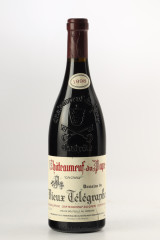
It is in the Rhône that 1998 reaches its fullest expression. A hot and dry season, without the rains that disrupted Bordeaux at the same time, brought grenache and syrah to full ripeness. In the south, Châteauneuf-du-Pape yields powerful and generous wines, the finest of which are still worth keeping today, more than twenty-five years after the harvest. In the north, Hermitage, Côte-Rôtie and Cornas produce deep and spicy syrahs, built on a tight framework.
Long judged austere in their youth, these wines have confirmed their stature with time: the great cuvées of the south as well as the exceptional hillside wines of the north rank among the most sought-after bottles of the decade. Among these references one finds Auguste Clape in Cornas and the Domaine de Pégau from the Châteauneuf-du-Pape side.
In Burgundy, the year demanded rigour. The August heat sometimes marked the grapes, and it was necessary to wait for about ten days of fine weather, between 16 and 26 September, to harvest in good conditions; sorting was essential in the face of mildew and powdery mildew. Harshly judged at the outset, the reds revealed in bottle a deep colour and real structure. The Côte de Nuits produced the most profound wines, while the Côte de Beaune proved more consistent.
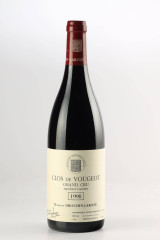
On the great terroirs of the Côte de Nuits, Drouhin-Laroze illustrates this ageing potential with a dense and structured grand cru, now fully open. This is a Burgundy to choose estate by estate, targeting the cuvées that have retained freshness.
Champagne experienced a turbulent season: a very hot August, then September rains that swelled the berries before sunshine returned from 14 September. The abundant harvest reached a fine potential alcohol level close to 9.8% vol. while retaining lively acidity, which led the large majority of houses to declare the vintage. The 1998 wines are vinous and well-balanced champagnes, now at full maturity.
This is a year to choose for vintage cuvées ready to drink, where the acidic tension still supports the richness of the fruit. The finest bottles, well kept, retain a lovely vivacity after more than two decades. Among the references of the 1998 vintage one finds: Dom Perignon and also Deutz
In Alsace, 1998 is better appreciated bottle by bottle than at the level of the region as a whole. The dry and luminous autumn favoured terroir rieslings and, above all, remarkable late-harvest wines and selections of noble botrytised grapes, borne by a rare concentration. It is these exceptional cuvées that make the vintage of interest to lovers of rare bottles.
The Cuvée Frédéric Émile from Maison Trimbach embodies the age-worthy riesling, straight and mineral, while the Clos Saint Urbain from Zind-Humbrecht, in a selection of noble botrytised grapes from the Rangen de Thann, reaches a liqueur-like density of great longevity. Two contrasting styles that sum up the hidden richness of Alsace in 1998.
Choosing 1998 means first targeting the right bank of Bordeaux and the Graves, now in their finest period, without overlooking the great ageing Rhônes or the Alsatian rarities that give the year its singularity. Every bottle is expertised, checked and stored in optimal conditions, then dispatched the same day before 2 pm for express delivery. A wooden gift box, personalised message and scheduled dispatch are available to help you prepare your birth-year gifts with ease. To compare 1998 with neighbouring vintages and find the right bottle, rely on the SoDivin Vintage Guide.


