 /
/ 





















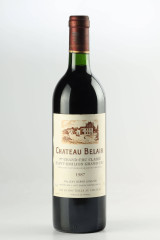
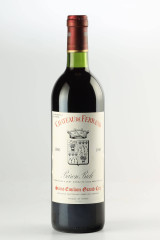


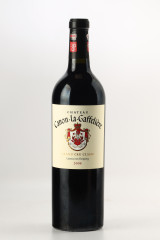


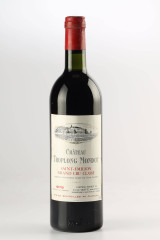


Receive our latest arrivals of Saint Emilion Appellation directly in your inbox!
Sign up and be the first to hear about new arrivals.

Would you like to create the composition yourself? Contact us!
 Contact us


On the Right Bank of Bordeaux, in the Libournais, Saint-Émilion unfolds a mosaic vineyard, spanning limestone plateau and slopes, clay-limestone foothills, and gravelly terraces. Merlot dominates, supported by cabernet franc, producing deep, velvety, and refined reds that rank among the great Bordeaux wines. A distinctive feature of the appellation, the Saint-Émilion classification is not fixed: it is reassessed approximately every ten years.
From the limestone hillsides to the gravel of the northwest, each sector leaves its own signature: the thoroughbred power of Château Ausone 2005 on the slope, the silkiness of Château Cheval Blanc 1998 on its gravel soils neighboring Pomerol. Great vintages, from the sun-drenched 2009 to the tensile 2016 vintage, reveal the aging potential of these crus.
Read moreFilter
Products (136)
Sign up and be the first to hear about new arrivals.
Discover OUR SELECTIONS
The Saint-Émilion vineyard, located on the right bank of the Dordogne River in Gironde, is one of the oldest in France, with Gallo-Roman origins. Its name comes from the monk Émilion, who settled in the region in the 8th century. From the Middle Ages, monks developed viticulture, and wines began to be exported, particularly to England. After centuries of evolution, the region distinguished itself in the 19th century for the quality of its terroirs. In 1955, a specific classification of Saint-Émilion wines was created, reviewable every 10 years, a rarity in Bordeaux. In 1999, the medieval city and its vineyard were inscribed on UNESCO's World Heritage List as a living cultural landscape. Today, Saint-Émilion is a symbol of viticultural excellence and a major destination for wine tourism.
The Saint-Émilion appellation is both a historic village, listed as a UNESCO World Heritage site, and the name of a world-renowned vineyard. This vineyard is actually composed of two appellations d'origine contrôlée (AOC): Saint-Émilion and Saint-Émilion Grand Cru.
Although they cover the same geographical area, these two appellations do not designate the same wines. The Saint-Émilion Grand Cru appellation is reserved for wines that meet stricter quality criteria, such as lower yields and longer aging. Within this appellation you'll find the prestigious Saint-Émilion Classification, which distinguishes between Grands Crus Classés and Premiers Grands Crus Classés.
Thanks to the great diversity of its soils, the Saint-Émilion appellation produces red wines of exceptional richness. Their profiles can vary from supple and fruity to powerful and mineral. Despite this diversity, all Saint-Émilion wines share common values of quality, authenticity and conviviality, which have made the region's reputation.
Saint-Émilion wines pair wonderfully with sauce-based dishes, red meats and cheeses. Their suppleness and fruity character make them particularly well-suited to classic French cuisine.
Few vineyards carry a history as long as that of Saint-Émilion. On the hillsides overlooking the Dordogne, the vine has accompanied the life of the town since Roman times, and the name of the town itself recalls the Breton monk who settled there in the 8th century. This heritage — medieval town, monolithic church carved out of the rock, catacombs, and walled enclosures — earned the jurisdiction of Saint-Émilion a place on the UNESCO World Heritage List in 1999, a first for a wine-growing landscape. On the wine side, the appellation d'origine contrôlée was recognized as early as 1936, among the first in France. It is expressed today in two appellations drawn from the same vineyard: Saint-Émilion and Saint-Émilion Grand Cru, this second designation referring not to a place but to a higher level of requirement, with lower yields and longer aging. This dual identity — heritage and winemaking — underpins the renown of a vineyard that ranks among the great references of the Bordeaux Right Bank.
The character of Saint-Émilion's wines is first revealed in its subsoil. The appellation covers approximately 5,400 hectares spread across nine communes, around the town and villages such as Saint-Christophe-des-Bardes, Saint-Hippolyte, and Saint-Laurent-des-Combes. Four major families of terroir can be distinguished. The limestone plateau, where the hard rock surfaces just beneath the vines, yields straight, fresh wines built to last. The clay-limestone slopes of the côtes, sun-exposed and well-drained, nourish the most complete crus. To the northwest, toward the Pomerol border, gravel and sand terraces bring finesse and fragrance. Finally, the sandy soils at the foot of the slopes, descending toward the Dordogne, produce more supple wines, ready to drink sooner. A temperate oceanic climate, with often luminous autumns, allows merlot to achieve beautiful ripeness here. To explore this mosaic sector by sector, our blog article dedicated to the appellation extends this reading of the terroir.
Saint-Émilion is a land of red wines, and of merlot above all: this grape variety accounts for approximately 60% of the plantings and defines the roundness, fleshy fruitiness, and velvety texture that make up the local reputation. Cabernet franc — known as "bouchet" in the Libournais — occupies nearly 30% of the vineyards and contributes structure, freshness, and floral or spicy notes; on the coolest terroirs, it can play a leading role. Cabernet sauvignon quietly completes the blend, especially on the gravelliest soils. Depending on the terroir and the winemaker's touch, styles range from a supple, fruity wine pleasant in its youth to a dense and profound great wine that unfolds with age into aromas of dark fruit, truffle, leather, and cocoa. At the table, these reds pair equally well with red meat or game, a bordelaise-style rib steak, or aged cheeses.
The hierarchy of Saint-Émilion has a rare distinction within the Bordeaux world: its classification is not set in stone forever. Established in 1955, it is reviewed approximately every ten years, whereas the famous 1855 Médoc classification remains immutable. This regular revision rewards the work accomplished and fosters healthy competition among estates. The classification distinguishes two levels: the Grands Crus Classés, the broad foundation of excellence, and, at the summit, the Premiers Grands Crus Classés A and the Premiers Grands Crus Classés B. A frequent confusion deserves clarification: belonging to this classification is not the same as producing a "Saint-Émilion Grand Cru," which is an appellation open to the entire vineyard area under certain conditions. The classification itself concerns only a limited number of selected châteaux. Because it evolves, it sometimes happens that some of the most prestigious estates choose to remain outside it: their reputation, for its part, is beyond question.
The aging potential of Saint-Émilion wines mirrors the diversity of its terroirs. A supple cru from sandy soils is best enjoyed within its first three to six years, for its fruit; a Grand Cru Classé from the limestone plateau calls for more patience and reaches its peak between eight and fifteen years; the Premiers Grands Crus Classés of great vintages can span two or even three decades. The vintage matters greatly: sunny years yield ample, generous wines, while cooler years favor brilliance and tension. Among the benchmark vintages, the 2010 red wine embodies balanced power, while a Saint-Émilion 2005 combines concentration and length. To place each year in context and choose according to your preferences, our vintage guide brings together all the useful reference points. Long recognized on the international stage, the appellation offers, in its finest sectors, a consistency that explains the loyalty of wine lovers.
The renown of Saint-Émilion is embodied in a constellation of estates that, each on its own terroir, express one facet of the appellation. On the limestone slope and plateau, Château Pavie unfolds a dense and sun-drenched character, while La Gaffelière and Château Canon cultivate a more restrained elegance. Château Angélus, on the southern foot of the slope, has built an international reputation on generous, thoroughbred wines. To the east, Troplong Mondot commands the plateau with its ample wines, while Larcis Ducasse and Canon-la-Gaffelière make the most of south-facing hillsides. To the northwest, on the gravel terraces, Figeac produces wines of great finesse, marked by an unusually high proportion of cabernets. So many signatures that, from limestone to gravel, sketch the richness of a vineyard where each château tells the story of its soil. Alongside these great names, dozens of family-owned crus carry on, with exacting standards, the identity of the appellation.


