 /
/ 






















Receive our latest arrivals of 1972 Wine directly in your inbox!
Sign up and be the first to hear about new arrivals.

Would you like to create the composition yourself? Contact us!
 Contact us

The 1972 vintage came from a cool year with a late harvest and high acidity. In Bordeaux, these conditions produced reds that were often light and a little green; only Graves on the Left Bank, led by Pessac-Léognan, truly benefited. The real appeal of 1972 lies elsewhere: in the Northern Rhône Valley, where Syrah produced structured wines built to age, and in Burgundy, where the Côte de Nuits turned that acidity into longevity. When buying, prioritize the Rhône and Burgundy, followed by Graves. In Bordeaux, Château Haut-Brion and Château La Mission Haut-Brion remain the year’s two benchmarks. To see how 1972 compares with other years, the Vintage Guide provides a region-by-region overview.
Read moreFilter
Products (7)
Sign up and be the first to hear about new arrivals.
Honestly, 1972 was not a great year in Bordeaux: most of its red wines are light and have passed their peak. Buying a 1972 wine makes more sense in the Rhône Valley and Burgundy, where the vintage was more successful, or among a few well-preserved Graves wines. For an approachable, dependable Bordeaux, a carefully made cru bourgeois such as Château Chasse-Spleen captures the character of the year. Always prioritize a bottle with a good fill level and verified provenance.
Yes, provided you choose carefully. For a 1972 birth year, it is best to look to regions where the vintage was successful: a Syrah from the northern Rhône, a Pessac-Léognan, or even a vintage spirit such as a 1972 Bas-Armagnac, which remains stable over time. These are dependable choices for a meaningful gift. Avoid the lighter Bordeaux reds, however, as they are more fragile today.
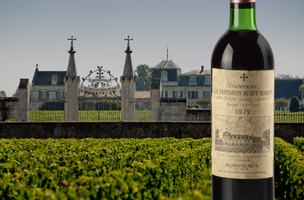
In Bordeaux, the vintage was most successful in Graves and Pessac-Léognan, where the terroir compensated for the lack of ripeness. The classified growths of Bordeaux from this area, led by Haut-Brion, are the safest bets of the vintage. Elsewhere, the Left Bank of the Médoc has a few individual successes, depending on the château. Above all, check the fill level, color, and provenance before buying.
1972 was a cool, late year, and its high acidity shaped everything. This trait worked against Bordeaux but favored regions that could turn it into freshness and aging potential. The buying priorities are therefore clear: the Rhône Valley first, Burgundy next, then Graves in Bordeaux. Here is what to seek out in each region—and what to leave to seasoned enthusiasts.
Insufficient ripeness often left the reds light, with dry tannins and muted fruit. The successes were concentrated in Graves on the Left Bank, especially Pessac-Léognan, where the terroir provided the depth lacking elsewhere. The Wine Cellar Insider notes how this area managed to produce wines that remain aromatic and balanced despite a difficult year. The rest of Bordeaux calls for strict selection, château by château.
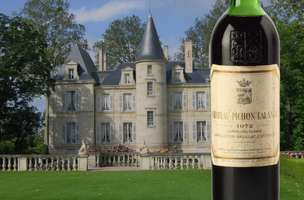
Haut-Brion is Bordeaux’s clearest success of the year, with a wine more concentrated and complete than the vintage average. Just next door, Château La Mission Haut-Brion shows what a great Pessac-Léognan terroir can achieve even in a difficult year, with spicy, smoky notes. In Pauillac, Château Pichon Longueville Comtesse de Lalande is among the estates that lived up to their reputation, while the Margaux appellation offers a few graceful bottles here and there. These are purchases for connoisseurs, to be chosen carefully.
Aging potential: most 1972 Bordeaux reds are at or past their peak. Choose well-preserved bottles, open them without delay, and check the fill level and provenance before buying.
Burgundy initially suffered from being judged against Bordeaux from the same year, yet it fared better in the 1972 vintage. The high acidity, puzzling when the wines were young, proved an asset: it gave the best reds unexpected longevity. According to Decanter, the Côte de Nuits clearly outperformed the Côte de Beaune, with better-structured Pinot Noirs. The whites were less successful and are mainly of interest to the curious.
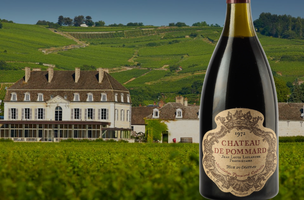
Among the year’s notable producers, Domaine Jean Grivot in Vosne-Romanée exemplifies the ripe tension that has aged so well, while Domaine Armand Rousseau in Gevrey-Chambertin produced beautifully precise wines from its grand cru vineyards. Nearly all the finest bottles come from the Côte de Nuits, where Pinot Noir’s structure best withstood the acidity of 1972. A Burgundy from Pommard, in the Côte de Beaune, rounds out the picture in a softer style.
Aging potential: well-made Côte de Nuits grand crus can still delight those who enjoy mature Pinot Noirs. Decant them, check their provenance, and regard them as bottles for curious enthusiasts rather than reliable everyday choices.
It is in the Rhône, especially its northern reaches, that 1972 shows its best side. The cool season preserved lively acidity, which gave the Syrah structured, aromatic wines built to age. Hermitage, Côte-Rôtie and Cornas are at the heart of this success. To be fair, the vintage does not rank among the Rhône’s most legendary, but it clearly stands above the rest of France that year.
In Côte-Rôtie, Guigal exemplifies the appellation’s fragrant, profound style, while in Hermitage, Paul Jaboulet Aîné made one of the year’s benchmark wines with its La Chapelle cuvée. Dense, peppery Cornas wines round out this family of age-worthy Syrahs. These are the most desirable bottles of 1972, prized by lovers of mature Syrah that has held up well.
Aging potential: the best Hermitage and Côte-Rôtie wines from reputable sources can still offer plenty of pleasure. Plan to decant them and seek out well-preserved bottles—true collector’s pieces for Northern Rhône Syrah enthusiasts.
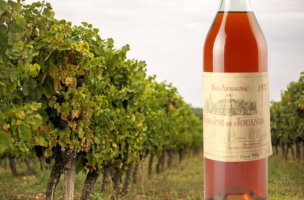
Here is the most reassuring way to approach 1972. A vintage Bas-Armagnac is a brandy from a single year—in this case, 1972—aged for many years in Gascony oak barrels before bottling. Unlike wine, a poor year for grapes does not preclude an outstanding brandy: distillation and then very long barrel aging shape its character. For a birth year, it is therefore an approachable, reliable option, whereas a 1972 wine requires more care in choosing.
Located in the heart of Bas-Armagnac, in the Southwest, is the most renowned subregion for this type of brandy. Over decades in the barrel, the spirit takes on an amber hue and develops notes of prune, vanilla and rancio, the characteristic aged quality of old brandies. A 1972 bottle can be enjoyed as it is today, without further waiting or risk, making it a dependable gift to mark a birth or birthday.
Aging potential: a spirit stops aging once bottled. A 1972 Bas-Armagnac remains stable over time, is ready to give or enjoy immediately, and is probably the simplest choice for a birth year.
In short, 1972 defies expectations: subdued in Bordeaux, it shines in the Northern Rhône and holds up well in Burgundy’s Côte de Nuits. Look first for age-worthy Syrahs and structured Pinot Noirs, then for Graves if you want a Bordeaux. Keep vintage Bas-Armagnac in mind as a reliable choice for a birth year. Every bottle offered is inspected and stored under optimal conditions, so that opening it lives up to the occasion. To see how the year compares with others and refine your choice, SoDivin’s Vintage Guide remains the best place to start.