 /
/ 


















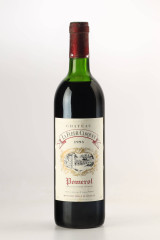


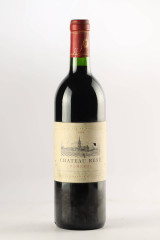


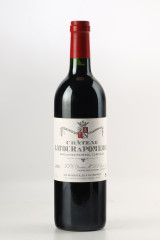


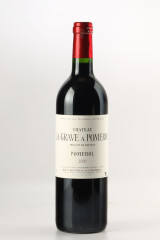


Receive our latest arrivals of Pomerol Appellation directly in your inbox!
Sign up and be the first to hear about new arrivals.

Would you like to create the composition yourself? Contact us!
 Contact us


On the right bank of Bordeaux, in the Libournais, Pomerol spreads across barely 800 hectares, making it one of the smallest vineyards in the Gironde. Its plateau of clays and gravels, with a subsoil that in places carries a ferruginous layer — the crasse de fer — produces reds in which Merlot dominates, supported by Cabernet Franc. Uniquely among the great Bordeaux wines, the appellation has never adopted a classification: its hierarchy is written in the terroir and the reputation of its estates. On the clay plateau, the great crus craft wines that are broad, velvety and truffle-scented, with remarkable longevity: Vieux Château Certan 2010 captures the elegance of the area, while La Conseillante 2009 expresses its silky tannins. Enthusiasts seek out age-worthy vintages, from the generous 2000 to the distinguished 1998 vintage.
Read moreFilter
Products (106)

Sign up and be the first to hear about new arrivals.
Discover OUR SELECTIONS
The Pomerol appellation is an appellation on the right bank of Bordeaux, located west of Saint-Émilion. It extends over approximately 735 hectares and is distinguished by wines renowned for their richness, finesse and great ageing potential. Despite the absence of an official classification, Pomerol ranks among the most prestigious appellations in Bordeaux.
Unlike the Médoc or Saint-Émilion, Pomerol has never established an official classification. The hierarchy of estates has been built solely on market recognition, wine enthusiasts and critics. This unique characteristic reinforces the image of an appellation where only the quality of the wine matters.
The rarity of the appellation, the limited production, the exceptional quality of the terroirs and the reputation of its estates explain the enthusiasm for Pomerol wines. Their ability to combine intensity, elegance and longevity makes them essential references for lovers of great wines.
The history of the Pomerol vineyard stretches back to Roman antiquity, but it was in the Middle Ages that the hillside truly took shape, when the knights of the Order of Saint John of Jerusalem — the Hospitallers — established a commandery there and developed the vines along the pilgrimage routes. The controlled designation of origin was recognized as early as 1936, among the very first in France. Long overshadowed by the great crus of the Médoc, Pomerol only gained its international reputation in the 20th century, especially after 1945: the elegance of its merlots then captivated wine lovers the world over and propelled a handful of estates to the very top of the Bordeaux hierarchy.
With just under 800 hectares, Pomerol is one of the smallest major appellations in the Bordeaux region. It extends across the commune of Pomerol and a strip of Libourne, bounded to the north by the modest stream of La Barbanne, to the east by Saint-Émilion and to the southwest by the town of Libourne. Its soil is far from uniform: it ranges from sandy terrain near Libourne to gravel mixed with clay, through to the famous clay plateau that occupies the heart of the appellation. Running beneath the surface in places is a layer rich in iron oxide, which the winegrowers call the "crasse de fer" (iron pan): this ferruginous subsoil layer retains water and nourishes the vine, lending the wines depth and texture. It is on the purest clays of the plateau that the most sought-after crus are born. Our article dedicated to Pomerol details these soil nuances sector by sector.
Pomerol produces only red wine. Merlot reigns supreme — nearly four-fifths of the grape varieties planted — complemented by Cabernet Franc, known locally as Bouchet, and a touch of Cabernet Sauvignon. Precocious and generous, Merlot thrives in the cool clays of the plateau: it yields wines with a broad, fleshy and velvety palate and silky tannins, while Cabernet Franc adds freshness and extends the bouquet. In the glass, a Pomerol evokes first ripe black and red fruits and violet, then, as it ages, truffle, leather and cocoa. This silky generosity makes it enjoyable in its youth, while also giving it the structure of a wine built for aging. At the table, it pairs with red meats, feathered game, a magret duck breast or a pan of sautéed mushrooms, and is best served at around 16 to 17 °C.
Unlike the Médoc with its 1855 classification, or Saint-Émilion with its regularly revised classified growths, Pomerol has never established an official classification of its wines. No list, no hierarchy enshrined in a decree: the appellation has chosen to let the terroir speak for itself. A hierarchy does nonetheless exist, but it is read in the soil map. Estates sitting on the pure clay plateau at the heart of the appellation produce the deepest and most sought-after wines; those on sandier soils at the periphery offer softer and more approachable reds. A cru's reputation is built vintage after vintage, through the consistency of its wines rather than an administrative ranking — a singularity that makes Pomerol a unique case among the great Bordeaux appellations.
A Pomerol that is initially fruit-forward is best enjoyed within five to ten years; the great crus of the plateau call for more patience and improve over fifteen to twenty years, or even well beyond for exceptional vintages. Time rounds out the merlot's tannins and brings forth the bouquet of truffle and undergrowth that is the hallmark of mature wines. In terms of vintages, the appellation delivers a fine consistency: legendary years such as Pomerol 1982 sit alongside more recent successes such as the 2016 red wine, not forgetting the outstanding sequences of 1989-1990, 2000, 2009 and 2010. To situate each year, our vintage guide summarizes the ratings vintage by vintage and helps in choosing a bottle ready to drink or to keep.
Pomerol's renown rests on a handful of estates that have become world references. At the very top sits Petrus, set on the purest clay tongue of the plateau, whose merlots rank among the rarest wines of Bordeaux. Nearby, the minuscule Le Pin has built a cult wine aura over a few decades, while Trotanoy and la Fleur-Petrus extend the deep and velvety style of the area. L'Évangile, a neighbor of Saint-Émilion, combines power and refinement, while l'Église-Clinet draws from old vines wines of remarkable intensity. More generous and more accessible, Château Gazin and le Bon Pasteur illustrate another facet of the appellation. Alongside them, a discreet estate such as Lafleur completes a constellation of crus that, together and without the benefit of an official classification, have elevated Pomerol to the rank of the world's greatest terroirs.


