 /
/ 




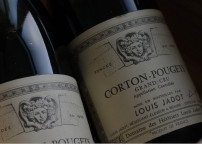
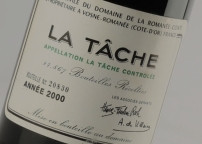
















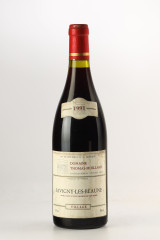


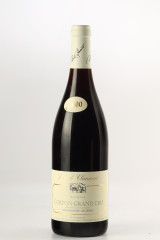


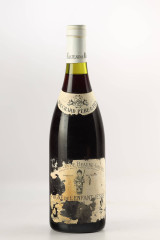


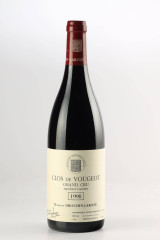


Receive our latest arrivals of Burgundy Region directly in your inbox!
Sign up and be the first to hear about new arrivals.

Would you like to create the composition yourself? Contact us!
 Contact us


Burgundy stretches its vineyard from Chablis in the north to the Mâconnais in the south, passing through the Côte de Nuits, the Côte de Beaune, and the Côte Chalonnaise. On its limestone hillsides, Pinot Noir produces refined reds and Chardonnay finely chiseled whites in Meursault, Puligny-Montrachet, Gevrey-Chambertin, Chambolle-Musigny, and Chablis. Everything there is read at the scale of the climat, the plot that underpins the hierarchy of the crus.
Great years such as the 2005 vintage, the 1999 wine, or 2009 attract the attention of age-worthy wine lovers. The taut Chablis of Vincent Dauvissat 2020 and the Côte de Beaune of Bouchard Père et Fils 2008 sketch two complementary faces of the Burgundian terroir. Read moreFilter
Products (143)
Sign up and be the first to hear about new arrivals.
Our selection of GREAT BURGUNDY WINES
The Burgundy region is distinguished by a network of prestigious appellations, based on the notion of terroir. From regional appellations to grands crus, each level reflects a precise identity. Among the most emblematic are Gevrey Chambertin, Vosne-Romanée, Meursault, Clos de Vougeot and La Tâche, renowned for the excellence and finesse of their wines.
The climats of Burgundy correspond to precisely delimited vineyard parcels, each endowed with unique characteristics related to the soil, exposure, and microclimate. This concept, specific to Burgundy, allows wines to faithfully express their terroir, sometimes on the scale of just a few rows of vines. Inscribed on the UNESCO World Heritage list, the climats illustrate an ancestral winemaking expertise. To learn more, discover our dedicated article: https://www.sodivin.fr/blog/2023/04/13/climat/
Burgundy is characterized by an extreme fragmentation of parcels, which often results in limited production. Many estates produce confidential quantities, reinforcing the rarity and appeal of great Burgundy wines among enthusiasts and collectors.
Burgundy's vines sink their roots into Roman Antiquity, but it is the Middle Ages that shaped its face. The monks, first at Cluny and then at Cîteaux, patiently observed and delimited the finest plots: as early as the 12th century, the Cistercians built the Clos de Vougeot in the midst of their vines, laying the foundations of a place-driven viticulture. In the 14th and 15th centuries, the Dukes of Burgundy carried the reputation of these wines across Europe. This long transmission led, in 1935, to the creation of the first appellations d'origine contrôlée, which formalized an identity already several centuries old: that of a vineyard where the name of the place takes precedence over that of the estate.
The vineyard stretches over nearly 30,000 hectares, from the Chablisien in the north to the Mâconnais in the south. Between the two, the Côte de Nuits and the Côte de Beaune form the historic heart, extended by the Côte Chalonnaise. Burgundy lives under a continental climate: cold winters, sometimes hot summers, and strong variability from one year to the next, which gives the vintage a decisive role. The predominantly limestone and marl soils provide the freshness and tension that characterize the wines; in Chablis, they are rich in marine fossils inherited from ancient seabeds, which explains the minerality of the whites. This mosaic of meticulously delimited plots, the climats, has been inscribed on the UNESCO World Heritage List since July 4, 2015, for the Côtes de Nuits and Côte de Beaune. To delve deeper, consult our blog article dedicated to the Burgundy climats.
Burgundy classifies its wines according to four levels that read like a pyramid. At the base, regional appellations cover the entire vineyard. Next come the village appellations, bearing the name of a commune, then the premier crus, from specific climats within a village, and finally the grand crus, the pinnacle of the hierarchy with only thirty-three appellations. This architecture is reflected in the Burgundy crus, between the Burgundy premier crus and the Burgundy grand crus. In the Côte de Nuits, the power of Pinot Noir expresses itself at the Gevrey-Chambertin appellation and at its summit, the grand cru Chambertin, then at Morey-Saint-Denis with the Clos des Lambrays, at Chambolle-Musigny and its grand cru Bonnes-Mares. Further south lie the Clos de Vougeot and the celebrated village of Vosne-Romanée, which is home to legendary monopoles such as Romanée-Conti and La Tâche, alongside Richebourg, Romanée-Saint-Vivant, Échezeaux, and Grands Échezeaux. The hillside ends at Nuits-Saint-Georges.
The Côte de Beaune brings together reds and whites: the Pommard appellation for structured wines, Meursault and Puligny-Montrachet for the greatest Chardonnays in the world. To the north, set apart from the hillside, Chablis cultivates a crisper, more saline style of white, reflecting its ancient soils.
Burgundy is built on two flagship grape varieties. Pinot Noir produces reds of great finesse, with aromas of red fruits and spices, gaining depth and notes of undergrowth over time. Chardonnay yields whites ranging from the most taut and mineral, in Chablis, to the most full-bodied and buttery in the Côte de Beaune. Alongside them, aligoté produces lively whites and gamay simpler reds, especially in the south, while Crémant de Bourgogne adds the region's sparkling note. At the table, a red Burgundy pairs well with poultry or a slow-cooked dish, while a great white complements fish and pressed-curd cheeses. The mastery of whites is evident at an estate such as Domaine Leflaive, a benchmark of Puligny-Montrachet.
Aging potential varies greatly depending on the appellation level and style. Regional and village wines are often enjoyed within their first few years, while premier crus and especially grand crus improve over one or even several decades. The great whites of the Côte de Beaune and high-level Chablis also evolve remarkably. The vintage remains decisive: sunny years like the 2015 vintage or a 2016 red wine offer different profiles from a more classic year such as the 1990 wine. To place each year in context, refer to our vintage guide. Through the consistency of its great terroirs, Burgundy ranks among the world's wine references, and its climats have long enjoyed international recognition.
Ordering a Burgundy wine at SoDivin means choosing an excellence service dedicated to lovers of great wines. Enjoy same-day dispatch for any order placed before 2 p.m., with delivery as early as the next day. Each bottle receives special care, and our packaging ensures optimal protection during transit.
SoDivin also offers you the possibility of adding a personalized message as well as wooden gift boxes, ideal for gifting on a birthday or other occasion. Furthermore, you can choose the shipping date for delivery tailored to your needs. Our wines are stored under optimal conditions, and you can view high-definition photos of each bottle online before your purchase, for complete transparency.


