 /
/ 
























Receive our latest arrivals of M. Chapoutier directly in your inbox!
Sign up and be the first to hear about new arrivals.

Would you like to create the composition yourself? Contact us!
 Contact us


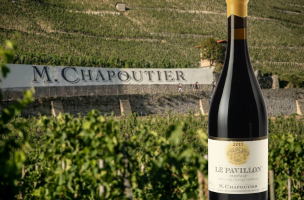
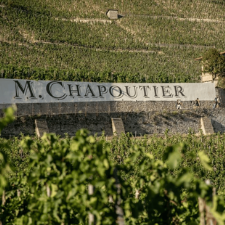
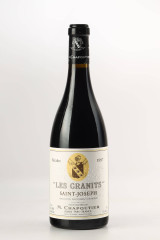
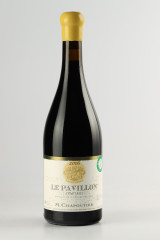
A family house founded in 1808 in Tain-l'Hermitage, M. Chapoutier is today the largest owner on the hill of Hermitage. Under the direction of Michel Chapoutier, the vineyard converted to biodynamics from the early 1990s: syrah for the reds, marsanne for the whites, and a parcel-by-parcel reading of the hillside. Since 1996, every label has also carried the name of the wine in Braille. Le Pavillon, born from the old vines of Bessards on granite bedrock, ranks among the greatest syrahs of the Rhône: the 1990 vintage and the 1989 stand among the finest the estate has produced, while the 2009 wine and the 2021 continue this pursuit of excellence in more recent years.
Read moreFilter
Products (35)
Sign up and be the first to hear about new arrivals.
A Few Great Wines from DOMAINE M. Chapoutier ...
Three traits: biodynamic viticulture adopted from the early 1990s, single-vineyard cuvées each sourced from a single lieu-dit on the Hermitage hill, and the wine's name printed in Braille on every label since 1996, as a tribute to Maurice Monier de la Sizeranne.
The great reds from Hermitage, particularly the single-vineyard selections, can easily be kept for twenty to forty years in good conditions and often need around ten years before fully opening up. The marsanne whites also age remarkably well. For a young vintage, decanting is recommended.
The M. Chapoutier house was founded in 1808, when Polydor Chapoutier acquired his first vineyards on the hillsides of Tain-l'Hermitage, in the northern Rhône Valley. From generation to generation, the family moved from winegrowing to aging and négociant activity, never leaving this cradle. The decisive turning point came in 1990: Michel Chapoutier, then in his early thirties, took over the direction of the company and reinvented its philosophy. He refocused the house on the expression of terroirs, converted the vineyard to biodynamics and created single-parcel cuvées. Today, the house farms a vineyard of approximately 360 hectares that extends well beyond the Rhône, with properties in Roussillon, Alsace, Portugal and Australia; but its historic heart remains the Hermitage hill, of which it has become the largest owner.
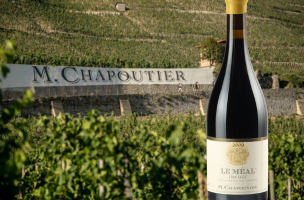
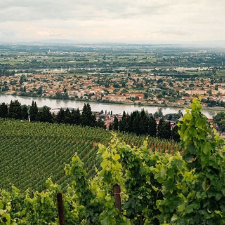
To understand the wines of M. Chapoutier, one must look at the Hermitage hill, a steep south-facing slope above the Rhône. Far from being uniform, this hill is a mosaic of small sectors — the lieux-dits — each possessing its own soil. The Bessards sector, resting on a granite bedrock, produces the most straight-lined and profound syrahs; it forms the backbone of a great Hermitage. A little further along, Le Méal rests on ancient terraces of pebbles and gravel brought by the river, yielding wines that are fuller and more generous. Les Greffieux, on finer soils mixed with rounded stones, contributes roundness and approachability. This parcel-by-parcel reading is at the heart of the house's work: rather than blending everything together, it bottles separately what each terroir has that is unique. The south-facing exposure and steep slopes, shaped into terraces, complete the picture by offering the vines maximum sunshine.
M. Chapoutier's style stems from a simple principle: intervene as little as possible and let the soil speak. From the early 1990s, the house converted its vineyards to biodynamics, an agriculture free from synthetic chemicals that nurtures the life of the soil and works in harmony with the seasons. In Hermitage, two grape varieties reign: syrah for the reds, marsanne for the whites. The reds are recognizable by their deep color and their aromas of dark fruits, licorice and spice, carried by a dense structure that softens with time. The marsanne whites, rarer, offer a generous texture, notes of white fruits, honey and flowers, and an aging potential that often surprises wine lovers. The grapes are harvested by hand, the winemaking remains restrained and the aging process seeks to preserve the freshness and mineral character of the site rather than imposing the influence of oak.
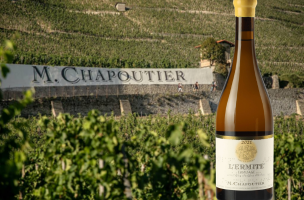
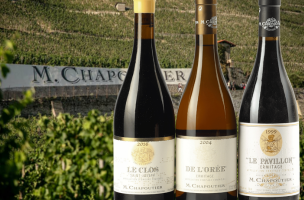
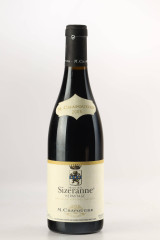
Two traits make the house immediately recognizable. The first is its single-parcel selections: cuvées of Ermitage — the house readily uses the old spelling — each sourced from a single lieu-dit and a single grape variety, produced in very small quantities. Le Pavillon, born from the old vines of Bessards on granite, is the most celebrated of these, alongside L'Ermite, Le Méal, Les Greffieux or, in white, De l'Orée. The second trait can be read, literally, with the fingertips: since 1996, every label from the house has carried the name of the wine, its vintage and its appellation in Braille. This tribute pays homage to Maurice Monier de la Sizeranne, a member of a family from Tain from whom the house purchased vineyards, who became blind as a child and went on to invent an abbreviated form of Braille and to found a major association for the blind. The house's historic Hermitage cuvée indeed bears his name. Few estates associate a great wine with such a gesture of accessibility.
The great wines of M. Chapoutier are wines built for aging. The red Hermitages, and above all the single-parcel selections, often require a decade to unwind their tannins, and the finest vintages pass effortlessly through three to four decades. In their youth, they impress with their power; with age, they gain in complexity and develop notes of leather, truffle, candied fruits and undergrowth. The marsanne whites, long underestimated, rank among the French white wines most capable of aging. This consistency at the highest level has earned the house constant international recognition for several decades: it now stands among the absolute references of the Rhône Valley, and its pioneering work in biodynamics and single-parcel terroirs has lastingly shaped the entire appellation.
Hermitage is one of the smallest and oldest great terroirs in France: barely more than 130 hectares of vines, shared among a handful of estates. M. Chapoutier holds a singular position there, having become its largest owner, with parcels in almost all of the finest lieux-dits. Its neighbors on the hill and in the northern Rhône each contribute, in their own way, to defining the face of these terroirs: the estate Jean-Louis Chave embodies the art of patient blending in Hermitage, while Paul Jaboulet Aîné produces the celebrated cuvée La Chapelle. Further north, on the slopes of Côte-Rôtie and Condrieu, the houses Guigal and Delas carry on this tradition of syrahs and long-aging whites. To place M. Chapoutier among these names is to recognize that one is touching the very summit of the northern Rhône Valley.