 /
/ 





















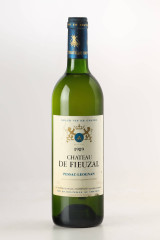


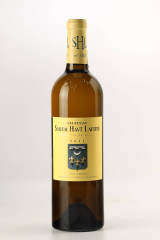


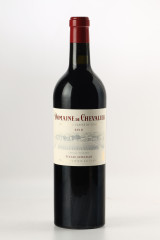

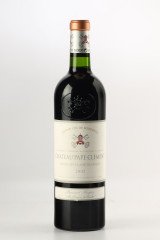


Receive our latest arrivals of Pessac Leognan Appellation directly in your inbox!
Sign up and be the first to hear about new arrivals.

Would you like to create the composition yourself? Contact us!
 Contact us


At the southern gateway to Bordeaux, Pessac-Léognan occupies the northern tip of the Graves, on deep gravel terraces spread across ten communes. Recognised in 1987, the appellation brings together among the Bordeaux wines the only estates to appear in the classified Graves crus classification for both their reds and their dry whites: Cabernet Sauvignon and Merlot produce structured reds, while Sauvignon and Sémillon yield great gastronomic whites.
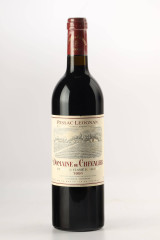
This dual vocation shapes a tight hierarchy, from the historic cru of Pessac to the estates of Léognan and Martillac. The depth of a Château Pape Clément 1998 or the distinguished balance of the Domaine de Chevalier 2005 speak to the appellation's ageing potential, confirmed by great recent vintages such as 2009 and the 2010 vintage.
Read moreFilter
Products (86)
Sign up and be the first to hear about new arrivals.
Les vins rouges de Pessac-Léognan sont majoritairement issus du cabernet sauvignon, du merlot et du cabernet franc. Les vins blancs secs reposent sur le sauvignon blanc et le sémillon, parfois complétés par une touche de muscadelle.
Oui, les vins de Pessac-Léognan offrent un excellent potentiel de garde. Les rouges peuvent évoluer sur plusieurs décennies, gagnant en complexité, tandis que les blancs les plus ambitieux peuvent se conserver et se bonifier pendant 10 à 20 ans.
The appellation boasts prestigious estates such as Château Haut-Brion, Château La Mission Haut-Brion, Château Pape Clément, Château Smith Haut Lafitte and Château Carbonnieux, true references among the great Bordeaux wines.
The vine has grown at the gates of Bordeaux since Antiquity, and it was on these gravelly soils close to the city that fine Bordeaux wine first made a name for itself. As early as the 17th century, the wine of Haut-Brion was sought after in London, where it was one of the first Bordeaux wines sold under the name of its estate rather than that of a simple shipping port. The Pessac-Léognan vineyard is therefore one of the oldest in the region, but its appellation is among the most recent: it was only officially recognised on 9 September 1987, separated from the broader Graves area at the initiative of local winemakers who wished to distinguish the most reputable gravelly terroirs of the northern part of the zone. This recent appellation on an ancient terroir forms the very identity of Pessac-Léognan.
Pessac-Léognan covers the northern part of the Graves, immediately south of Bordeaux, across around ten communes including Pessac, Léognan, Talence, Martillac, and Villenave-d'Ornon. Its name comes from its soil: the graves are thick layers of pebbles, gravel, and sand deposited millennia ago by the Garonne and its tributaries. This poor soil is an asset. It drains rainwater deep into the ground and forces the vine to root deeply in search of nutrients; during the day, the pebbles absorb the sun's heat and release it at night, helping the grapes to ripen fully. Flanked by the city to the north, the Garonne to the east, and the vast Landes forest to the west, the vineyard benefits from a temperate oceanic climate, sheltered from extremes. To explore the nuances of this terroir commune by commune, consult our blog article dedicated to the appellation.
Pessac-Léognan produces two main types of wine. The reds, which account for the large majority of the planted area, blend Cabernet Sauvignon and Merlot, often complemented by a little Cabernet Franc and Petit Verdot; they offer ripe fruitiness, a smoky note characteristic of the gravelly terroir, and silky tannins that gain in finesse with age. The whites, rarer, rank among the greatest dry whites of Bordeaux: made from Sauvignon and Sémillon, sometimes enhanced with Muscadelle, these are "dry" wines — that is, without residual sugar — often aged in barrel, with aromas of citrus and white flowers and a mineral palate. At the table, the reds accompany red meats and game, while the whites pair with fish, shellfish, and cream-based poultry dishes.
The hierarchy of Pessac-Léognan rests on the Graves classification, established in 1953 and later updated in 1959 to include dry white wines. Its distinctive feature: it ranks estates according to their reputation and the quality of their wines, rather than by parcel boundaries as in Burgundy. Fourteen châteaux are classified, in red, in white, or in both, and all are situated today within the Pessac-Léognan appellation, making it the qualitative heart of the Graves. One estate holds a unique position: Château Haut-Brion is the only cru located outside the Médoc to also appear among the premiers grands crus classés of the famous 1855 Bordeaux classification, a testament to the longstanding nature of its renown. This dual recognition, in both red and white, has no equivalent among the communal appellations of Bordeaux.
The wines of Pessac-Léognan are built to last. The great reds are commonly cellared for ten to twenty years, sometimes longer: their youthful fruit then gives way to notes of undergrowth, leather, and spice. The dry whites, often underestimated, also age remarkably well — five to fifteen years for the finest — developing honey, candied fruit, and minerality. The appellation ranks among the reliable values of the Bordeaux left bank, with a consistent track record across great vintages. In terms of years, 2005, 2009, and 2010 yield reds of excellent ageing potential, while 2015 and 2016 confirm a particularly consistent modern series; to compare vintages with one another, refer to our vintage guide, useful for instance in placing a 2016 red wine against a more mature classic.
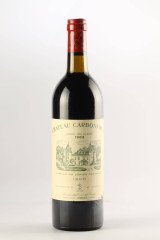
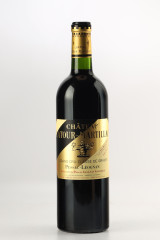
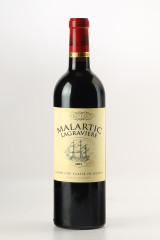
The appellation's renown is best read through its estates. In Pessac, Château Haut-Brion and its neighbour La Mission Haut-Brion embody the historic pinnacle of the area, alongside Château Pape Clément, one of the oldest vineyards in the city. Towards Léognan, the Domaine de Chevalier shines equally in red and white, as do Château Haut-Bailly, Château Carbonnieux, Château de Fieuzal and Château La Louvière. Further south, in Martillac, Château Smith Haut Lafitte and, back in Léognan, Château Malartic-Lagravière complete this circle of classified crus whose styles, from the most full-bodied to the most finely chiselled, map out the full breadth of Pessac-Léognan.


