 /
/ 




















Receive our latest arrivals of Château D'Armailhac directly in your inbox!
Sign up and be the first to hear about new arrivals.

Would you like to create the composition yourself? Contact us!
 Contact us


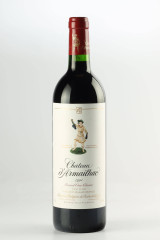
Château d'Armailhac, Fifth Grand Cru Classé of Pauillac, embodies a faithful and elegant interpretation of the great Médoc terroir. Located in the northern part of the appellation, on deep gravel soils, the estate relies on a strong dominance of Cabernet Sauvignon to produce structured, precise and harmonious wines. Long known under the names Mouton-d'Armailhacq then Mouton-Baronne-Philippe, the château regained its historic name in 1989, marking a new stage in its qualitative affirmation. Consistent, refined and accessible both in its youth and after aging, Château d'Armailhac stands as an essential reference among the great wines of Pauillac.
Vintages such as Château d'Armailhac 1995, Château d'Armailhac 2000, Château d'Armailhac 2005, Château d'Armailhac 2016 illustrate the estate's ability to produce balanced, expressive wines suited for aging, sought after by lovers of great Pauillac.
Filter
Products (7)
Sign up and be the first to hear about new arrivals.
The history of Château d'Armailhac is deeply rooted in that of the Pauillac appellation, and is distinguished by a succession of names that reflect the different periods of its evolution. The estate's origins date back to the 18th century, when it belonged to the d'Armailhacq family, from whom it takes its original name. At that time, the vineyard was already recognized for the quality of its terroirs and wines.
During the 19th century, the estate was also known as Château Mouton-d'Armailhacq, due to its geographical proximity and historical ties with the neighboring Mouton vineyard. This reputation enabled it to be classified as Fifth Grand Cru Classé in the official 1855 classification, permanently establishing its place among the great wines of the Médoc.
At the beginning of the 20th century, the château changed ownership and adopted the name Château Mouton-Baron-Philippe, then Château Mouton-Baronne-Philippe, in homage to Baroness Philippine de Rothschild. This period marked a commitment to quality affirmation and progressive modernization of the estate, both in the vineyard and in the winery.
In 1989, the estate officially returned to its historical name of Château d'Armailhac, a strong symbolic choice marking the return to a fully autonomous identity, rooted in its terroir and heritage. This return to the original name was accompanied by a reinterpretation of style, aiming to produce a Pauillac faithful to its roots, combining classicism, precision and accessibility.
The vineyard of Château d'Armailhac is located in the northern part of the Pauillac appellation, on emblematic terroirs of the Bordeaux left bank. The soils are composed mainly of deep gravel, mixed with sand and pebbles, resting on a draining subsoil. This structure promotes deep rooting of the vine and regular water supply, essential for wine balance.
The influence of the Gironde estuary plays a regulatory climatic role, limiting thermal extremes and allowing progressive and homogeneous ripening of the grapes, an essential condition for the fine expression of Cabernet Sauvignon.
The grape variety composition of Château d'Armailhac is dominated by Cabernet Sauvignon, complemented by Merlot, Cabernet Franc and Petit Verdot. This diversity allows for precise blends, adapted to each vintage. Vineyard work emphasizes yield control and the pursuit of balanced maturity, without excess.
Vinification is conducted with rigor, with a focus on respecting the fruit and terroir. Barrel aging accompanies the wine's evolution without dominating its expression. The style of Château d'Armailhac is characterized by a classic Pauillac structure, elegant tannins and an aromatic palette blending black fruits, spicy notes, graphite and cedar.
The wines of Château d'Armailhac offer solid aging potential, generally between ten and twenty years depending on the vintage. They are distinguished by their ability to be enjoyed relatively young while gaining complexity over time. International critics regularly highlight their consistency, precision and excellent balance between classicism and accessibility in the landscape of great Pauillac wines.
Within Pauillac, Château d'Armailhac is part of an exceptional environment, alongside benchmark estates such as Château Lynch-Bages, recognized for its generosity and depth, Château Grand-Puy-Lacoste, appreciated for its classic style and longevity, Château Pontet-Canet, or the legendary Château Mouton Rothschild renowned for its viticultural excellence. Through its distinctive identity and unique history, Château d'Armailhac fully contributes to the richness and stylistic diversity of the Pauillac appellation.


