 /
/ 


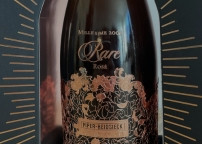
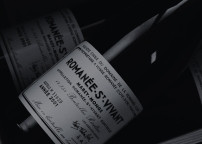

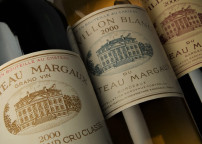

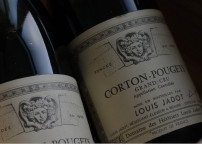
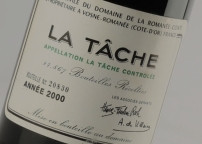


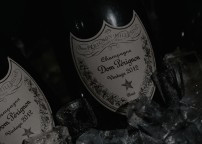





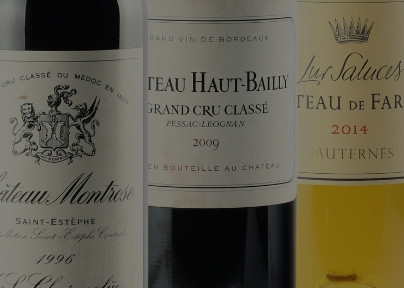




















Receive our latest arrivals of 2002 Wine directly in your inbox!
Sign up and be the first to hear about new arrivals.

Would you like to create the composition yourself? Contact us!
 Contact us

In 2002, a fine late season rescued a year that began with rain: a north wind and a sunny September concentrated healthy grapes, benefiting the most rigorously managed vineyards. The vintage shines brightest in Champagne, where it ranks among the region's finest modern years, with lively acidity and remarkable aging potential. Burgundy follows closely, with pure, balanced reds and fine, energetic whites. In Bordeaux, success lies on the Left Bank, where Cabernet Sauvignon produced classic, precise wines, while the more difficult Rhône calls for careful selection: Château Latour made one of the year's finest wines, while Dom Pérignon embodies the brilliance of 2002 Champagne. To put each region and style in perspective, consult our Vintage Guide.
Read moreFilter
Products (36)
Sign up and be the first to hear about new arrivals.
A few GREAT WINES from 2002...
The 2002 vintage cannot be judged as a whole: its success varies considerably by region. Two regions stand out, Champagne and Burgundy, followed by solid Left Bank Bordeaux and a more difficult Rhône. This ranking can guide your purchase: favor the regions where the vintage truly excelled and choose more carefully elsewhere. Here is what to know, region by region, about the wines' style, quality and current drinking condition.
Champagne produced one of its finest recent vintages in 2002, often compared with 1996 and 1990. The year brought together rare ripeness and high acidity, a combination that gives the wines both richness and tension. The result is structured, profound cuvées with great aging potential. It is a consistently successful vintage at every level, from vintage bruts to prestige cuvées. For many, 2002 ranks among the region's finest years.
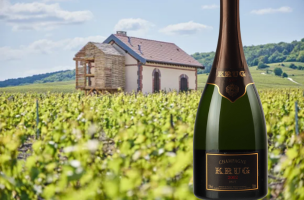
The major houses all excelled that year. Krug produced a vintage of remarkable density, made for long aging. Bollinger made deep, vinous cuvées true to its Pinot Noir style. The Blanc de Blancs, made exclusively from Chardonnay, reached remarkable purity and length in 2002. From one house to the next, the common thread is the same: ripe fruit sustained by vibrant acidity, promising evolution over two decades and beyond.
Aging potential: cuvées that have already been disgorged can be enjoyed now, but most great 2002 bottles will still benefit from more time; check the fill level and the condition of the closure.
Burgundy has a great classic in this long-underestimated vintage. A north wind dried the grapes before harvest, concentrating healthy, perfectly balanced fruit. The reds benefited most: pure, precise and beautifully fresh, without excessive power. For many, it is the region's finest year for reds since 1996. The whites are also successful—elegant and energetic, with Chablis leading the way.
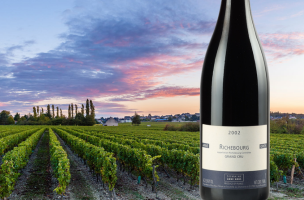
On the Côte de Nuits, the Grands Crus yield wines of great finesse, exemplified by Maison Louis Jadot's dense, distinguished Chambertin Clos de Bèze. At Domaine Anne Gros, the Richebourg combines depth and precision, true to the spirit of the vintage. The Vosne-Romanée and Chambolle-Musigny appellations are among the year's most accomplished. For whites, however, it pays to be careful when buying: some Côte de Beaune wines have suffered premature oxidation, so reliable provenance is preferable.
Aging potential: the reds are now in an excellent drinking window, and the best will hold for several more years; for whites, choose a bottle with reliable provenance and open it sooner rather than later.
In Bordeaux, 2002 is a classic vintage saved by a warm, dry September. Cabernet Sauvignon ripened better than Merlot, making the difference: on average, the Left Bank (Médoc and Graves) outperformed the Right Bank. Sorting was decisive, and the finest terroirs often overperformed in this cool year. The wines are focused, precise and medium-bodied, built for moderate aging rather than power. The sweet wines of Sauternes also benefited from a fine fall, showing a lovely expression of botrytis—the “noble rot” that concentrates the grapes.
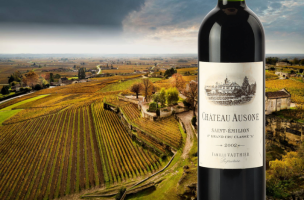
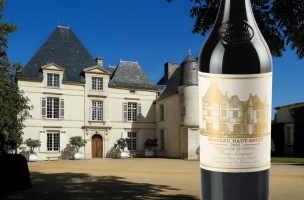
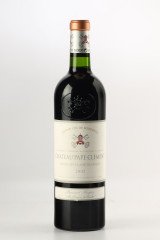
In Saint-Julien, classic Médoc wines lead the way, with Château Léoville Las Cases and Château Gruaud Larose showing their characteristic pedigree. In Pessac-Léognan, Château Pape Clément exemplifies the success of Graves with an elegant, smoky style. On the Right Bank, the best bottles come from Saint-Émilion's limestone plateau, where Château Troplong Mondot stands out; it is there that Ausone made one of the year's finest wines. At the top, the first growths confirm that great terroirs shine precisely in cool years.
Aging potential: most 2002 reds are now at their peak and a pleasure to drink; the Premiers Crus and best classified growths can wait longer, provided you check the fill level and label.
The Rhône had a difficult 2002 vintage. Heavy rains in early September hit the southern valley hard, particularly around Châteauneuf-du-Pape, and many wines there were declassified. The north fared better, with Côte-Rôtie even ranking among the year's relative successes. Selection was decisive throughout: only the most rigorous estates made compelling wines. This is a year to approach with discernment, focusing on reliable producers in the north.
In Côte-Rôtie, Guigal was among the most reliable producers, making fragrant, elegant wines. The best cuvées from the north, made from Syrah grown on well-exposed slopes, show the vintage at its most appealing. In the south, successes are rarer and depend on rigorous sorting, as at Clos des Papes in Châteauneuf-du-Pape. For this region, it is better to focus on leading estates than to take too many chances.
Aging potential: wines from the south should be drunk without delay; the best Côte-Rôtie wines from the north still have structure and can be enjoyed now for their fruit and freshness.
The 2002 vintage rewards buyers who heed the regional hierarchy. Champagne and Burgundy are the safest choices, followed by classic Left Bank Bordeaux and a Rhône that calls for careful selection. At SoDivin, every bottle is inspected by experts and stored under optimal conditions, so you can enjoy it without unpleasant surprises. To compare regions and styles year by year, our Vintage Guide can help you choose.