 /
/ 


















There are no products here at the moment.
You can use the search bar or menu to find others, or send us a message.
Back to homepage Contact us
Would you like to create the composition yourself? Contact us!
 Contact us

The 1968 vintage will be remembered as one of the most gruelling years of the 20th century for French vineyards. A cold summer, one of the wettest Augusts ever measured and the rainiest year since 1951 produced underripe grapes and a delicate harvest, opened on 20 September on an abundant but poorly concentrated crop. In Bordeaux, the left bank held up better, supported by the rigour of its first growths: Château Latour 1968 owes its holding power to a structure that preserves the wine despite the smallness of the year, while Château Mouton Rothschild 1968 remains one of the few bottles from the vintage still sought after, as does Petrus 1968 for its rarity. To place 1968 against other years, consult the Vintage Guide.
Read moreYou can use the search bar or menu to find others, or send us a message.
Back to homepage Contact usSign up and be the first to hear about new arrivals.
Some GREAT WINES FROM 1968 ...
The 1968 vintage is not ranked among the greatest historical vintages, but it has produced very fine wines in certain renowned appellations.
Yes, many 1968 wines are now at optimal maturity, provided they have been stored in good conditions.
The 1968 vintage is characterized by classic, structured wines, often elegant rather than powerful, with a faithful expression of terroir.
The 1968 vintage belongs to the small group of truly difficult years of the French 20th century. A wet spring, a summer that never really established warmth and above all a glacial and rainy August — among the wettest ever recorded — delayed ripening and swelled an abundant but concentrated-free harvest. The harvest, opened on 20 September, was carried out on barely ripe grapes, and few regions escaped dilution. This is a vintage approached without illusions about power, but one that reserves, here and there, a few bottles of character born of the rigour of the greatest estates — and one category, that of eaux-de-vie, where 1968 proves far more convincing than one might imagine.
In Bordeaux, the year was harsh and selection unforgiving; some estates even chose not to release their grand vin, as was the case with Château Palmer, which downgraded its entire 1968 production rather than stake its name on it. In this context, the left bank of the Médoc fared better than the right bank, and only terroirs capable of rigorous sorting managed to salvage something from ungrateful raw material. Château Latour is the most accomplished exception of the year in Pauillac: its tannic structure saved the wine where others faded, and the finest bottles still offer an evolved colour and a complex nose of cedar, tobacco and spice. Château Mouton Rothschild retains real heritage value among collectors, while on the right bank Petrus illustrates the capacity of a great Pomerol terroir to hold firm when the vintage falters.
Burgundy was not spared the coolness and rains of 1968, and quality volumes there were meagre. This is a vintage where the estate's signature is everything: only houses capable of drastic sorting and patient ageing drew any finesse from healthy Pinot Noirs, when the average of the year remained pale and fleeting. The great vineyards of the Côte de Nuits concentrate the little interest that remains, starting with the Domaine de la Romanée-Conti, whose oldest bottles retain, in perfect specimens, the delicacy characteristic of the greatest terroirs. The Domaine Comte Georges de Vogüé is among the rare signatures to seek out for a Burgundy red from this year, provided conservation is scrupulously verified.
In the Rhône Valley, 1968 struck the south less harshly than the northern Syrah, which struggled to ripen. The southern reds, more generous by nature, offered tender and accessible wines in their youth, of which only a few carefully preserved bottles from great houses remain today. In the north, only the most serious cellars saved the day: the house Paul Jaboulet Aîné remains a reference for anyone seeking a still-living Syrah bottle from this vintage, while Guigal remains the preferred signature in Côte-Rôtie. These are curiosity purchases, to be chosen bottle by bottle and not to be kept waiting.
This is where 1968 takes its revenge. In Bas-Armagnac, the quality of a vintage does not depend on grape concentration as it does for wine: distillation, followed by long decades of ageing in wood, transforms even a modest harvest into a brandy of great depth. The 1968 vintages of the region rank among the most reliable of the decade, carried by estates that bottle only the best of each year. The Bas-Armagnac Boingnères 1968, produced from a high proportion of Folle Blanche, embodies this rare and refined elegance, while the Bas-Armagnac Sempé 1968, from its Grande Réserve, offers a fuller and more generous character. This is the true way to celebrate 1968 in a bottle: a birth year, an anniversary or a great date find here a bottle that has lost none of its splendour.
Approaching 1968 wine means accepting a troubled year and retaining only its exceptions: a first growth from Pauillac at a perfect level, a great preserved Pomerol, a rare Burgundy bottle of illustrious lineage or, safer still, a vintage bas-armagnac that stands the test of time without faltering. Each bottle in our selection is expertly assessed, verified for authenticity and provenance, then stored under controlled conditions before shipping. To compare vintages and refine your choice, consult the SoDivin Vintage Guide.
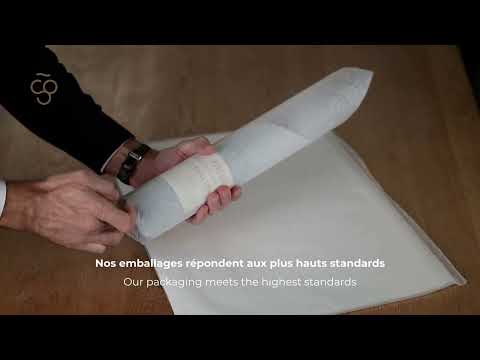
Same-day shipping for any order placed before 2 p.m., express delivery and secure packaging. Each bottle is photographed in high definition for a purchase made with complete confidence.


