 /
/ 

-
-
-
-
- 1735
- 1748
- 1860
- 1863
- 1879
- 1893
- 1895
- 1897
- 1900
- 1903
- 1904
- 1905
- 1906
- 1908
- 1911
- 1912
- 1913
- 1914
- 1918
- 1920
- 1921
- 1922
- 1923
- 1924
- 1926
- 1927
- 1928
- 1929
- 1930
- 1931
- 1932
- 1933
- 1934
- 1935
- 1936
- 1937
- 1938
- 1939
- 1940
- 1941
- 1942
- 1943
- 1944
- 1945
- 1946
- 1947
- 1948
- 1949
- 1950
- 1951
- 1952
- 1953
- 1954
- 1955
- 1956
- 1957
- 1958
- 1959
- 1960
- 1961
- 1962
- 1963
- 1964
- 1965
- 1966
- 1967
- 1968
- 1969
- 1970
- 1971
- 1972
- 1973
- 1974
- 1975
- 1976
- 1977
- 1978
- 1979
- 1980
- 1981
- 1982
- 1983
- 1984
- 1985
- 1986
- 1987
- 1988
- 1989
- 1990
- 1991
- 1992
- 1993
- 1994
- 1995
- 1996
- 1997
- 1998
- 1999
- 2000
- 2001
- 2002
- 2003
- 2004
- 2005
- 2006
- 2007
- 2008
- 2009
- 2010
- 2011
- 2012
- 2013
- 2014
- 2015
- 2016
- 2017
- 2018
- 2019
- 2020
- 2021
- 2022
- 2023
- 2024
- 2025
-
-
-
-
 Guides for Vintages
-
-
-
-
-
Chateaux
- Angelus
- Ausone
- Beychevelle
- Branaire Ducru
- Calon Segur
- Cheval Blanc
- Cos d'Estournel
- Coutet
- Ducru Beaucaillou
- Figeac
- Giscours
- Grand Puy Lacoste
- Gruaud Larose
- Haut Brion
- La Conseillante
- La Fleur Petrus
- La Mission Haut Brion
- Lafite Rothschild
- Lafleur
- Latour
- Leoville Las Cases
- Lynch Bages
- Margaux
- Montrose
- Mouton Rothschild
- Pavie
- Petrus
- Pichon Longueville Baron
- Pichon Longueville Comtesse
- Pontet Canet
- Rayne Vigneau
- Talbot
- Yquem
- View all
-
-
-
-
MAGNUMS
-
-
-
-
-
Producers
- Bouchard Père Et Fils
- Domaine Armand Rousseau
- Domaine Arnoux Lachaux
- Domaine Bernard Dugat Py
- Domaine de la Romanée Conti
- Domaine des Comtes Lafon
- Domaine Des Lambrays
- Domaine Dujac
- Domaine Georges Roumier
- Domaine Jean Grivot
- Domaine Leflaive
- Domaine Méo Camuzet
- Domaine Mongeard-Mugneret
- Jean Louis Trapet
- Maison Louis Jadot
- Mommessin
- View all
-
-
-
-
MAGNUMS
-
-
-
-
-
-
-
MAGNUMS
-
-
-
-
-
-
MAGNUMS
-
-
-
-
-
-
-
MAGNUMS
-
-
-
-
-
Guides for Vintages
-
-
-
-
-
-
-
-
Current Assortments
-
Wine selections by price
-
-
Create your own assortment
Would you like to create the composition yourself? Contact us!
-
-
-
-
-
-
Guides for Vintages
-

















 Contact us
How do we assess the condition of the bottles?
Bottle levels: criteria by age
The expected level depends on the age of the wine and its region (Bordeaux / Burgundy). The diagram below illustrates the most common normal ranges. These benchmarks are given for guidance and take into account natural aging.
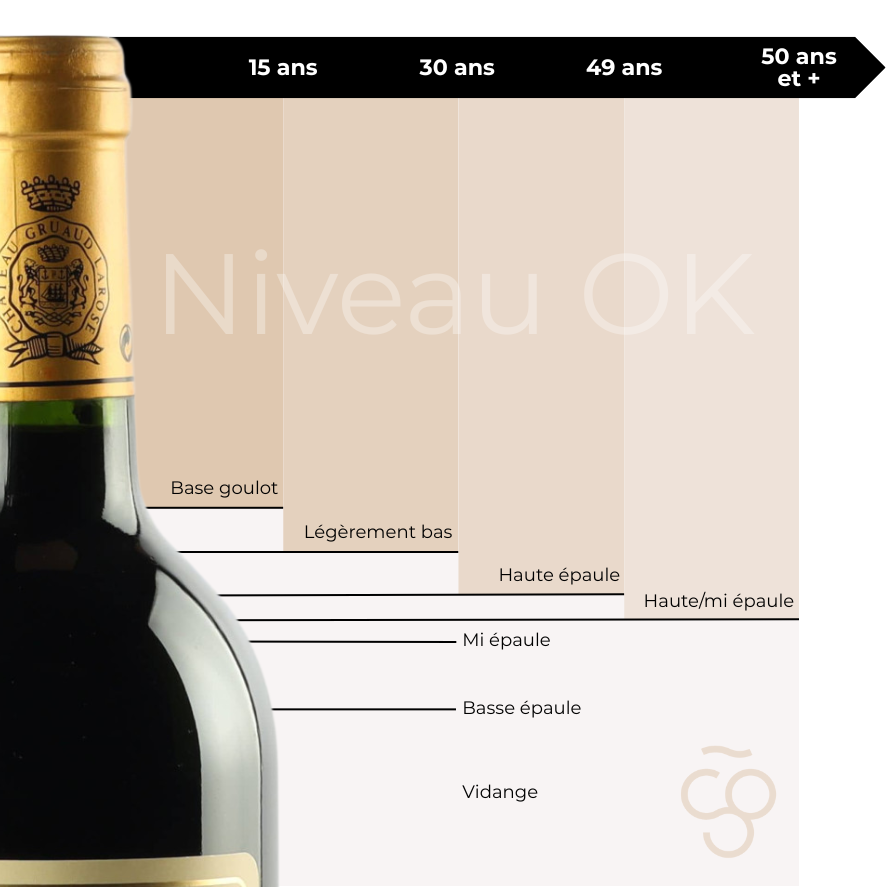
Levels of Bordeaux bottles
Bordeaux bottles are characterized by their pronounced shoulders, an ideal visual reference for assessing the wine fill level.
This level is an essential indicator of preservation, as it provides information on the natural evaporation of the liquid through the cork over time.
A well-preserved wine has a level appropriate to its age. Here are the key references:
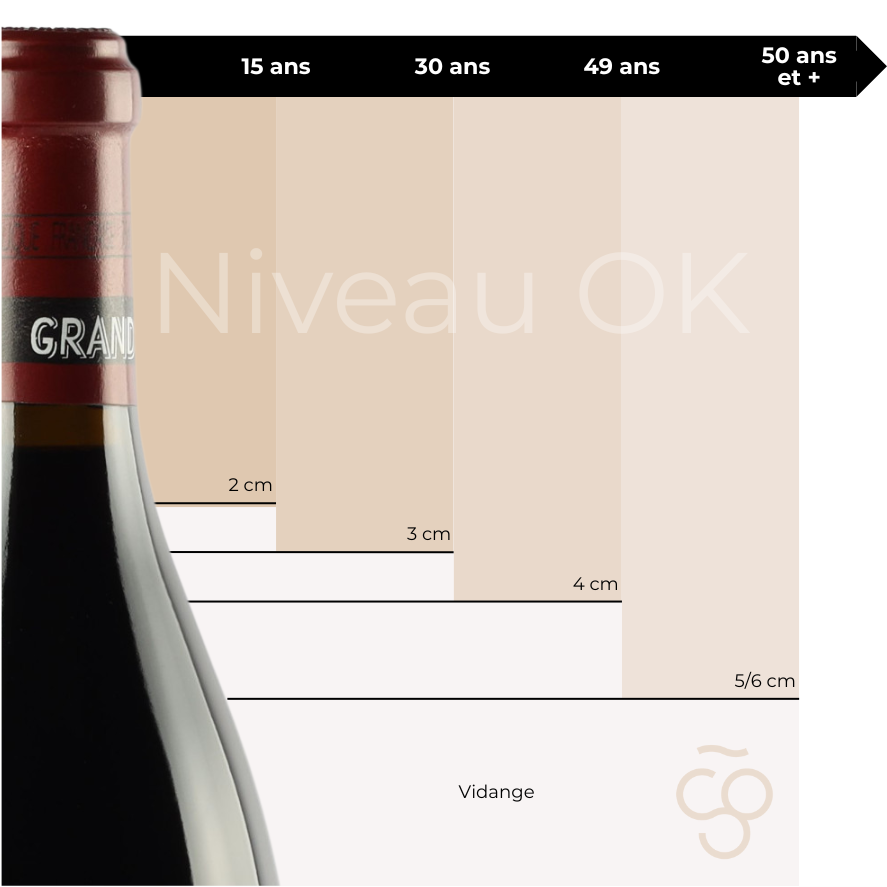
Level of other Bottles
Burgundy bottles and those from other regions, which are more slender, have a long neck and little shoulder.
The wine level is therefore measured in centimeters below the cork.
These variations are normal and vary according to the age of the wine.
Fill level specifications for other bottles
Reference levels according to wine age
Wines aged 10 to 15 years:
Level at approximately 2 cm below the cork or better.
This level is considered perfect, a sign of optimal preservation in a temperate and humid cellar.
Wines aged 16 to 30 years:
Level at approximately 3 cm below the cork or better.
This is a perfectly normal level, corresponding to controlled aging without excessive loss.
Wines aged 31 to 50 years:
Level at approximately 4 cm below the cork or better.
This is a level consistent with the wine's age, typical of a well-preserved old bottle.
Wines over 50 years old:
Level at approximately 5 to 6 cm below the cork or better.
This level is common for very old wines and remains acceptable if the cork and capsule are in good condition.
A lower level (beyond 6 cm below the cork) may indicate greater evaporation. This does not necessarily mean a defect, but it is advisable to inspect the bottle before opening or to entrust it to a professional.
Other French regions
The same evaluation principles apply to other major French wine regions: Rhône, Loire, Alsace, Jura or Champagne.
-
Bottles with a long neck, such as those from Alsace or the Loire, also use measurement in centimeters below the cork.
-
Red wines from the Rhône and Loire, often bottled in soft-shouldered bottles, are evaluated according to criteria similar to those of Burgundy.
-
Old champagnes may present a slightly lower level due to internal pressure and cork porosity, without this necessarily being abnormal.
If there is no additional information on the wine sheet, this means that its condition is normal given its age.
Details on the levels of Bordeaux bottles
10 to 15 years:
Level at the base of the neck or better.
Label in good condition.
16 to 30 years:
Level slightly below the base of the neck or better.
Label in good condition or slightly marked by time.
31 to 50 years:
Level at high shoulder or better.
Label in good condition or marked by time but perfectly legible.
Over 50 years:
Level between high and mid shoulder or better.
Label in good condition or very marked by time but legible.
If there is no additional information on the wine sheet, this means that its condition is normal given its age.
Label condition: a guarantee of authenticity, not quality
At SoDivin, each bottle is carefully examined, and the condition of its label is always indicated with transparency.
The label bears witness to the bottle's history: it may be perfectly preserved, slightly marked by time or more damaged depending on cellar conditions.
These variations are normal and have no impact on the quality of the wine contained in the bottle.
Good to know:
A marked or stained label is often a sign of storage in a humid cellar, an ideal condition for wine preservation over several decades.
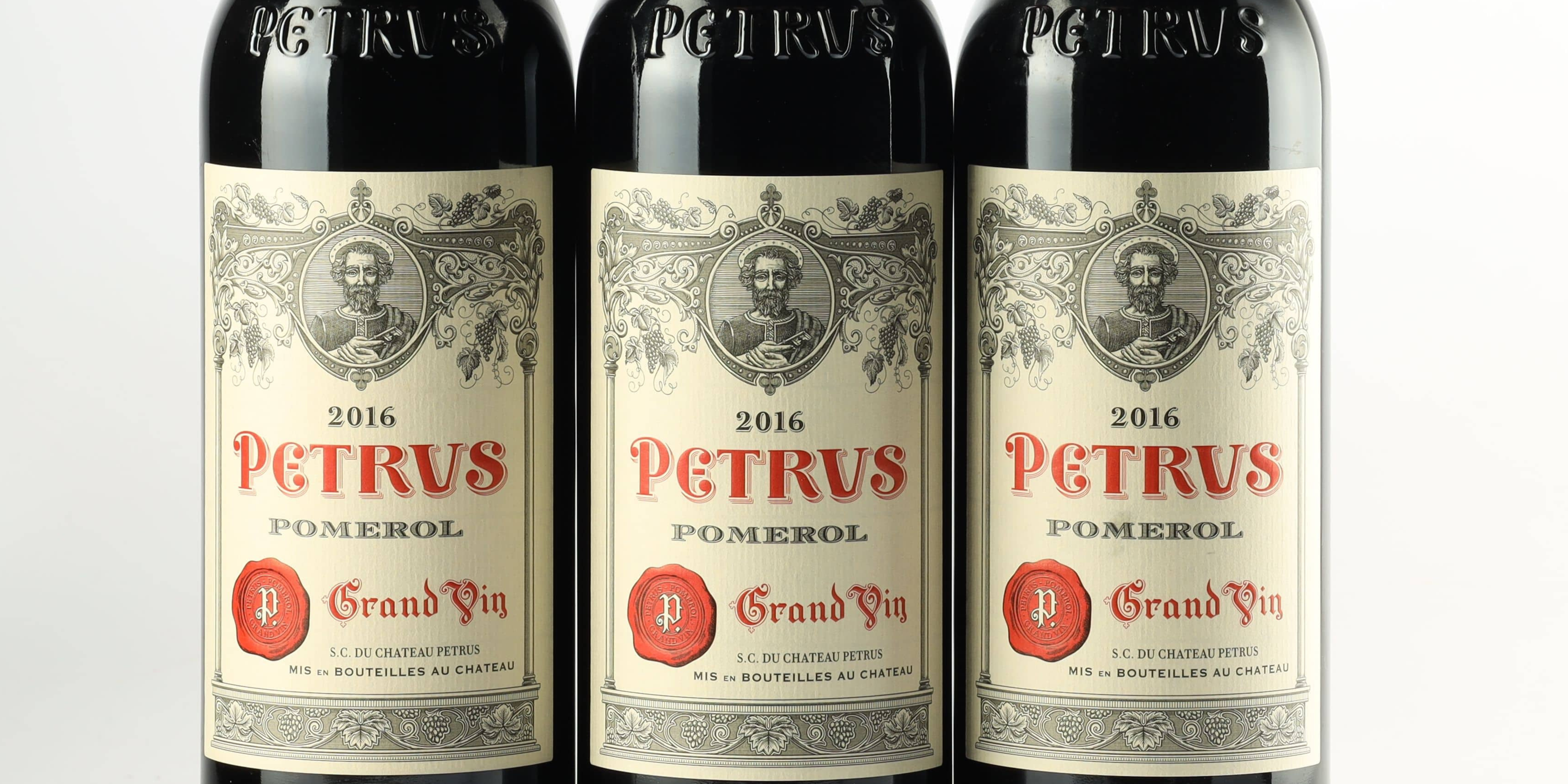
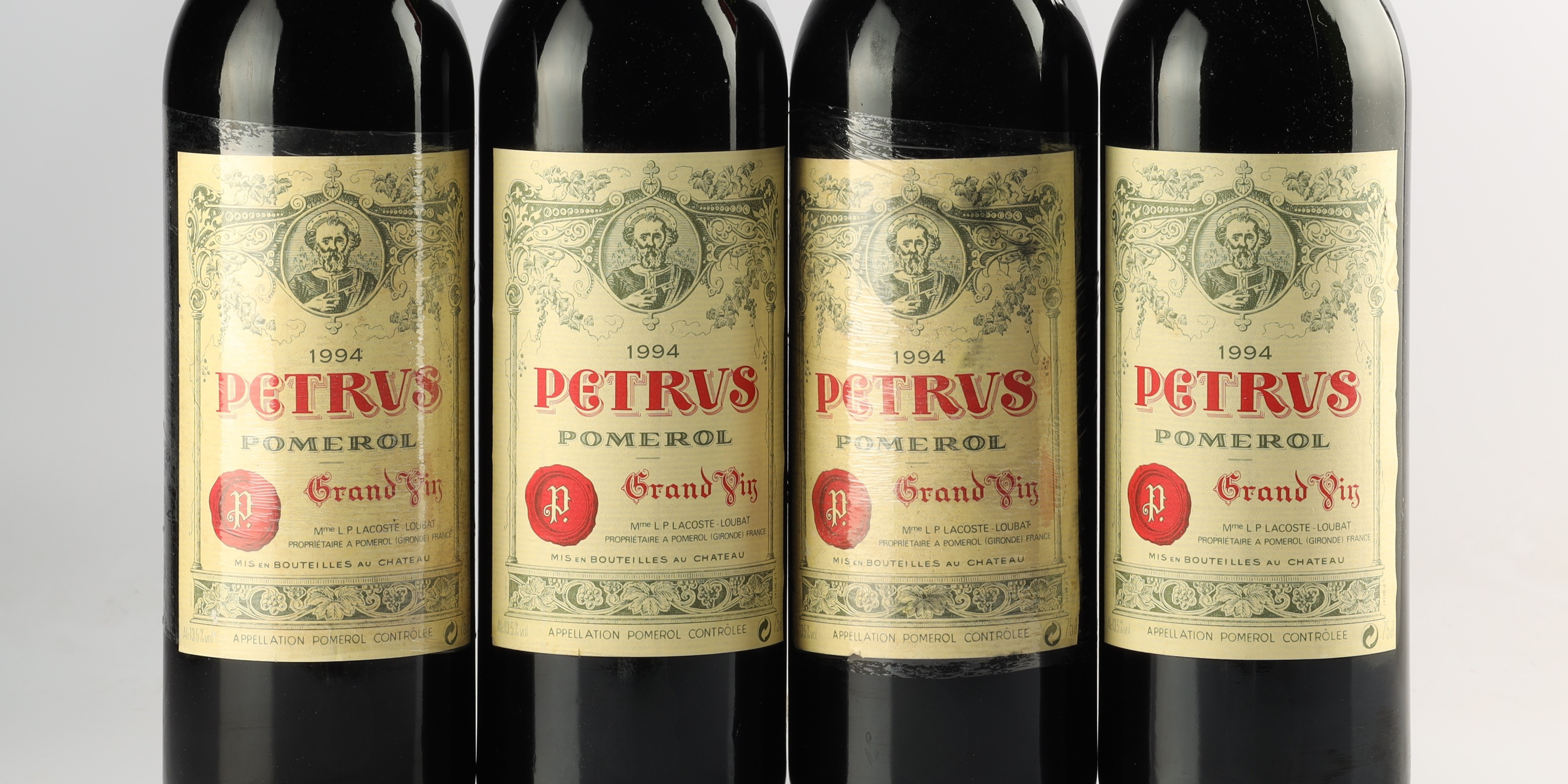
Very fine label
Details — Understanding label condition
Very fine label
A very fine label indicates a perfectly preserved bottle. The paper is clean, the colors are sharp and no tears are visible.
This type of label is mainly found on recent wines or on bottles stored in dry and stable cellars.
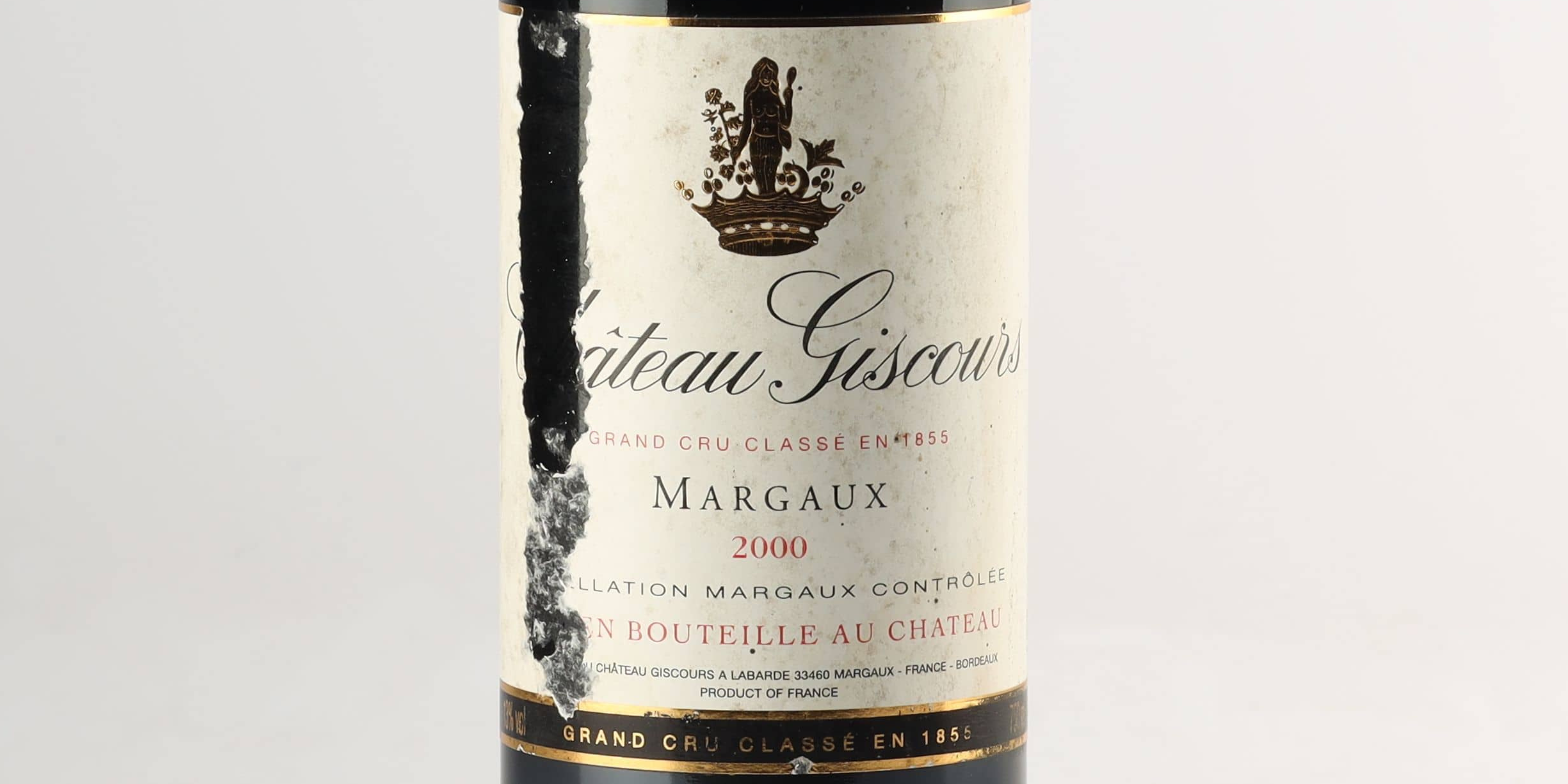
Slightly damaged label
This level corresponds to small marks, stains, discoloration or micro-tears.
This is a normal condition for a wine of several decades, often linked to a humid cellar — which is beneficial for the wine itself.
The legibility of the estate name, vintage and appellation remains perfect.
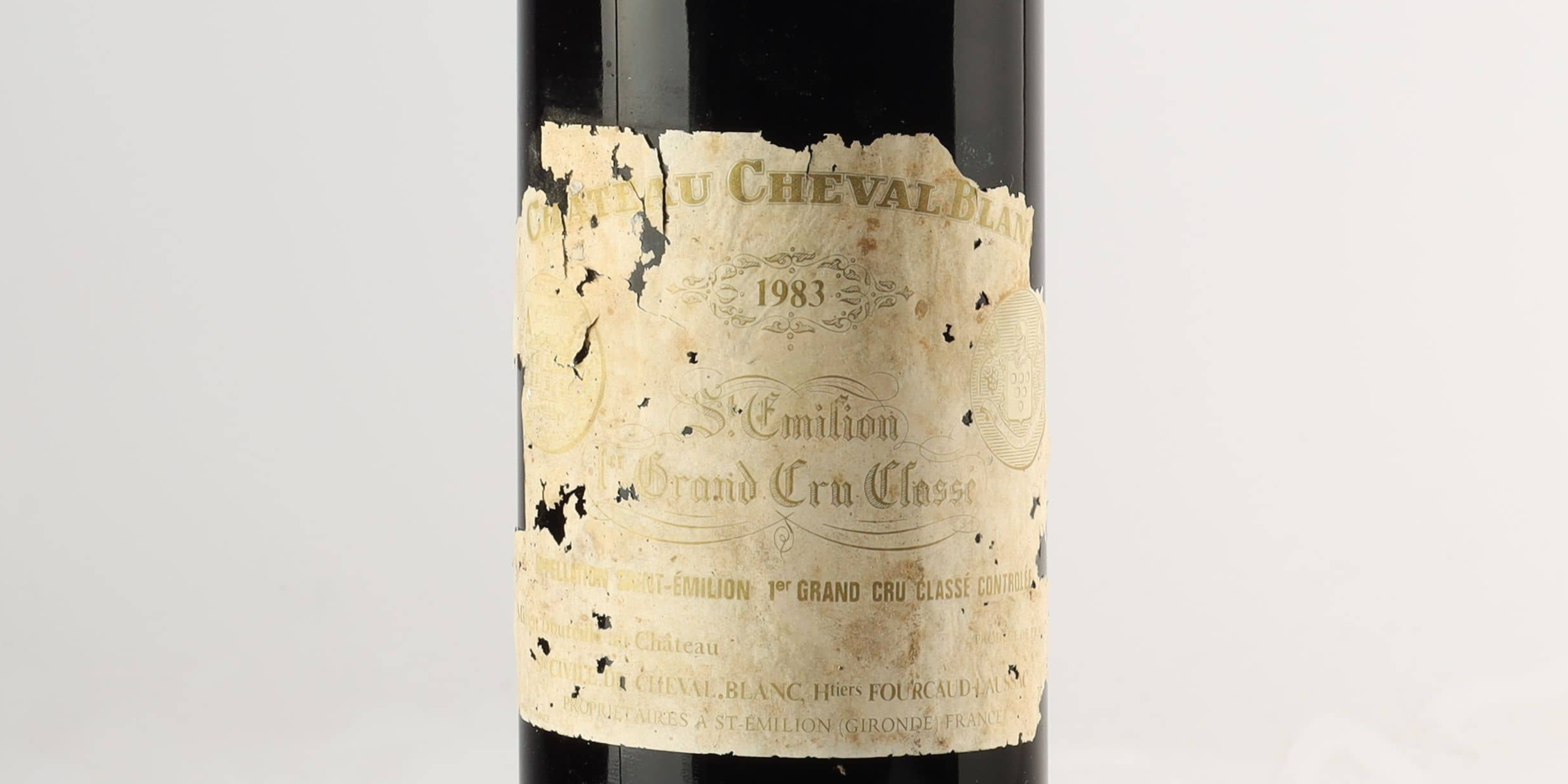
Damaged label
A damaged label may show more visible tears, faded or missing areas.
This is a common condition on old wines (30 years and more) that have aged in natural cellars.
This patina of time does not alter the quality of the wine in any way and even contributes to its authenticity.
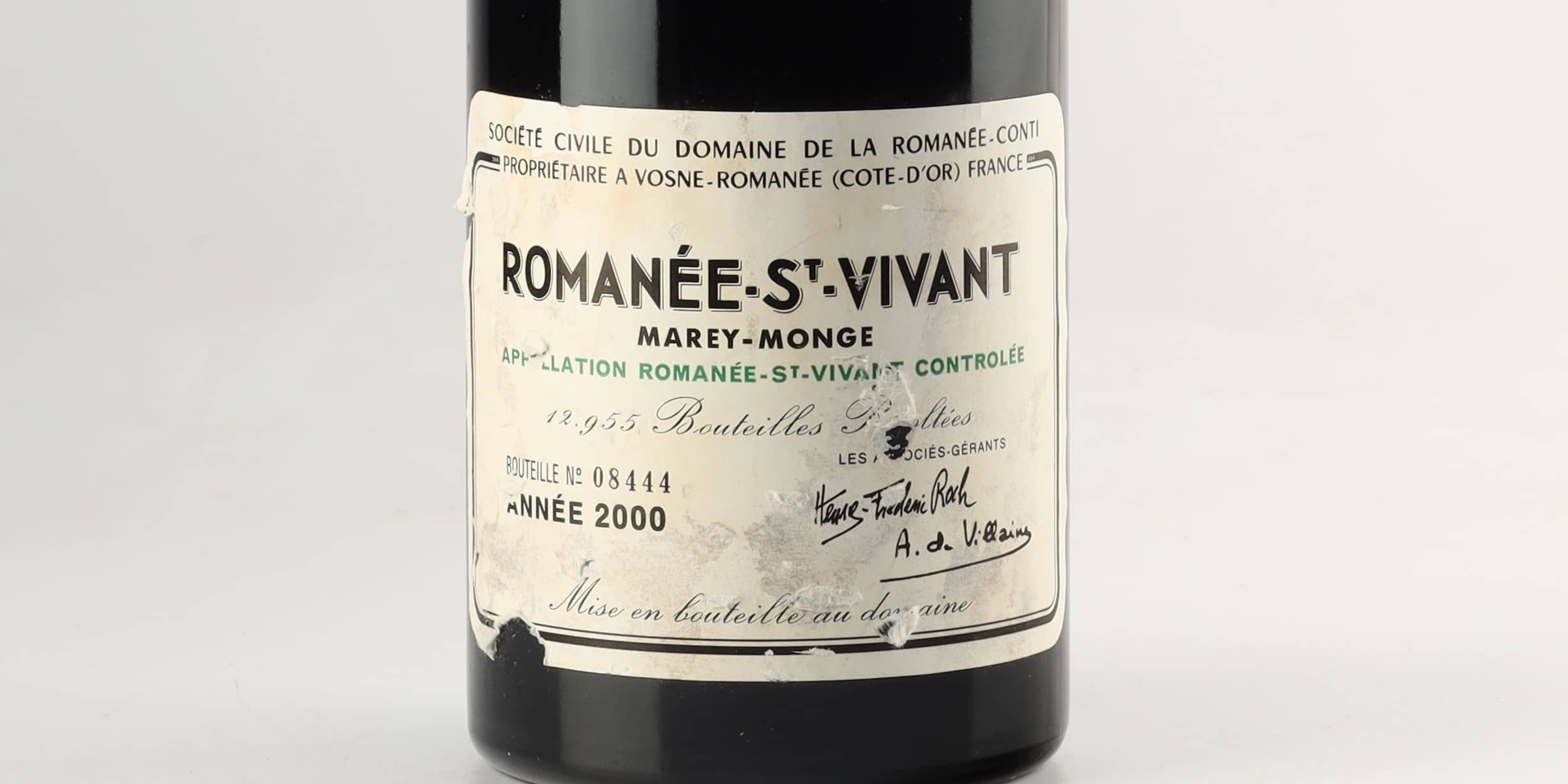
Very damaged or missing label
On certain very old vintages, the label may be severely deteriorated or absent.
In this case, the SoDivin team carefully checks the wine level, the capsule and the provenance before any sale.
These bottles are rigorously selected and guaranteed authentic.
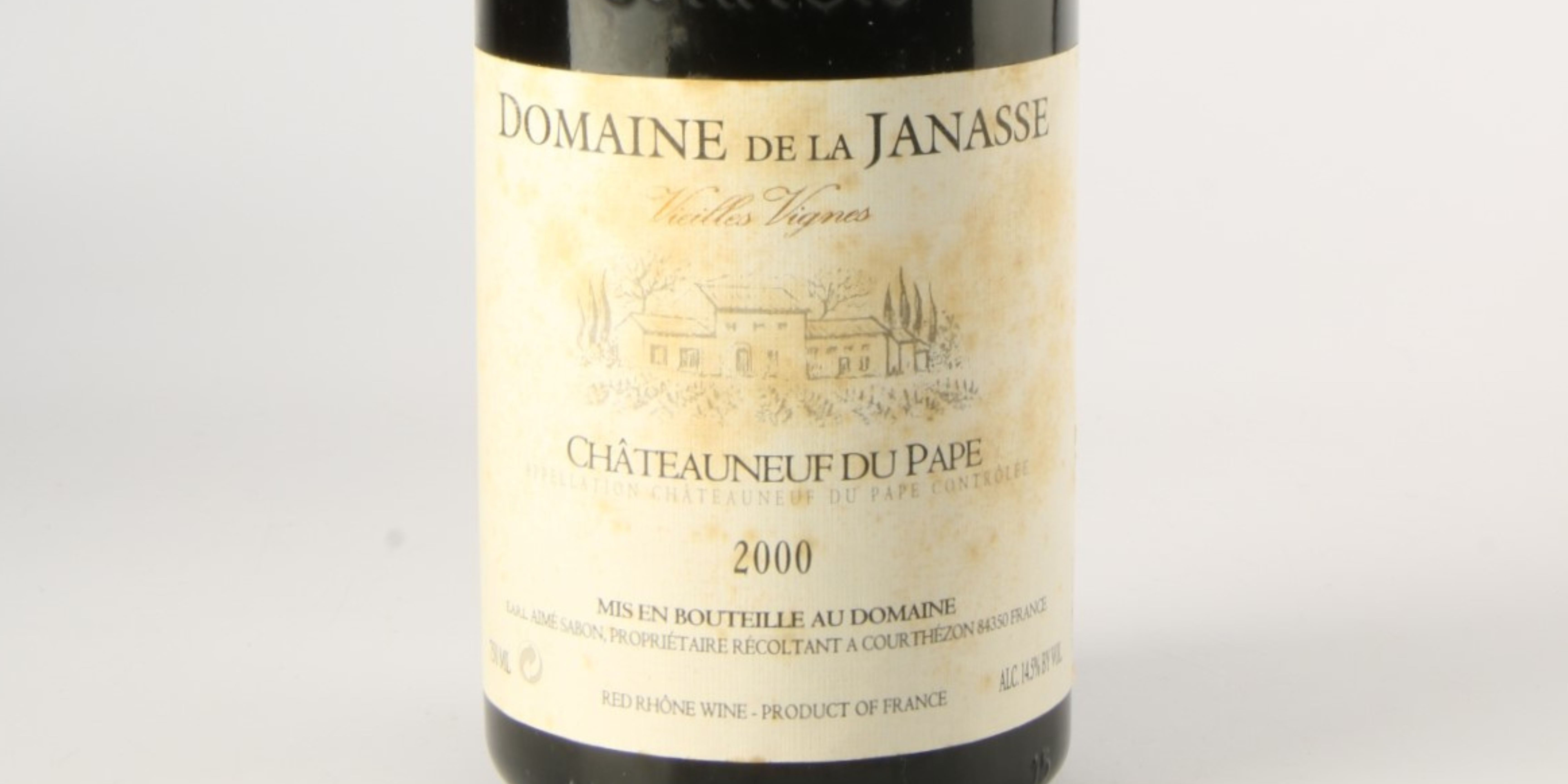
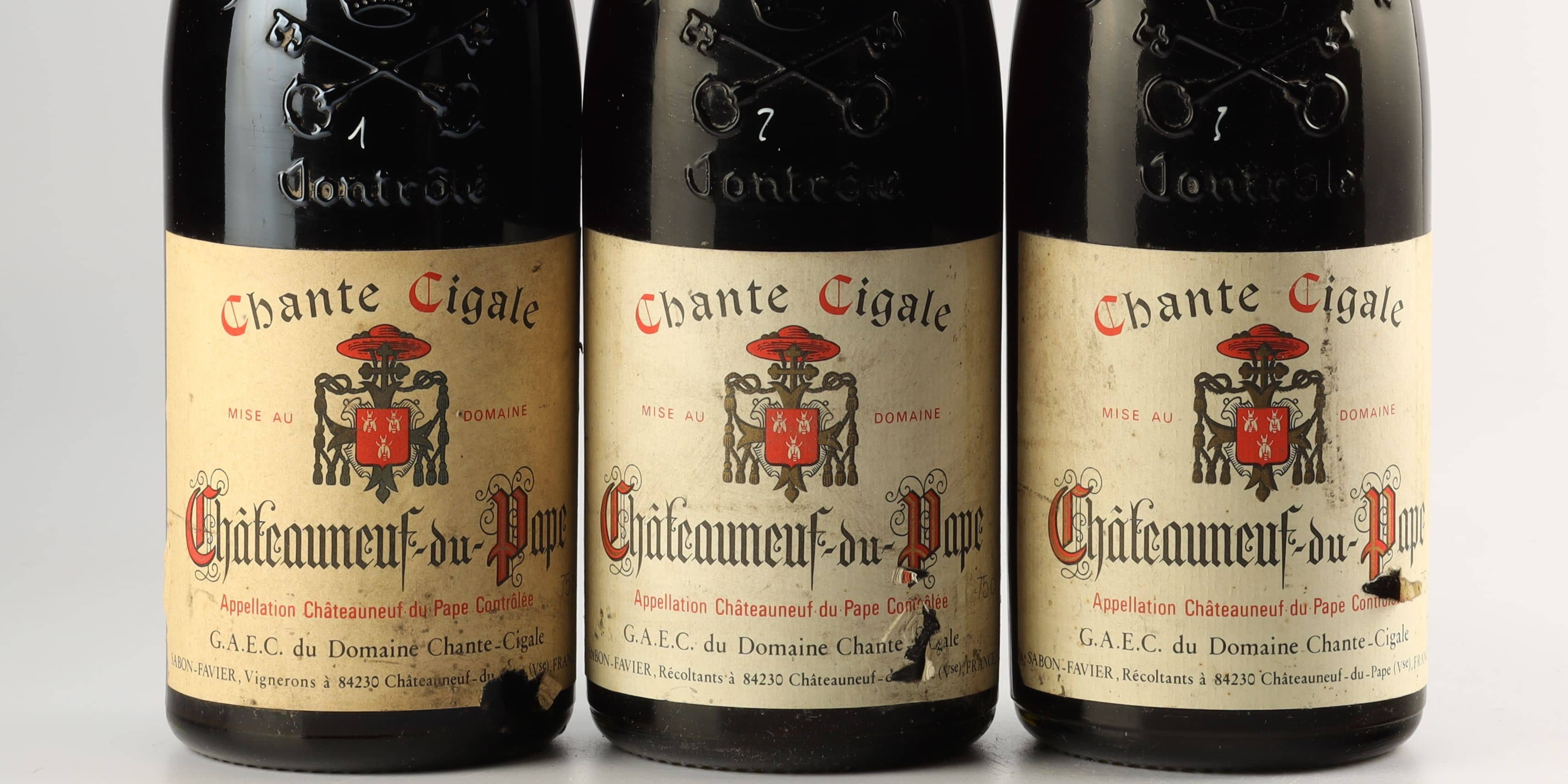
Label slightly damaged

Label damaged
Label very damaged
Capsule condition
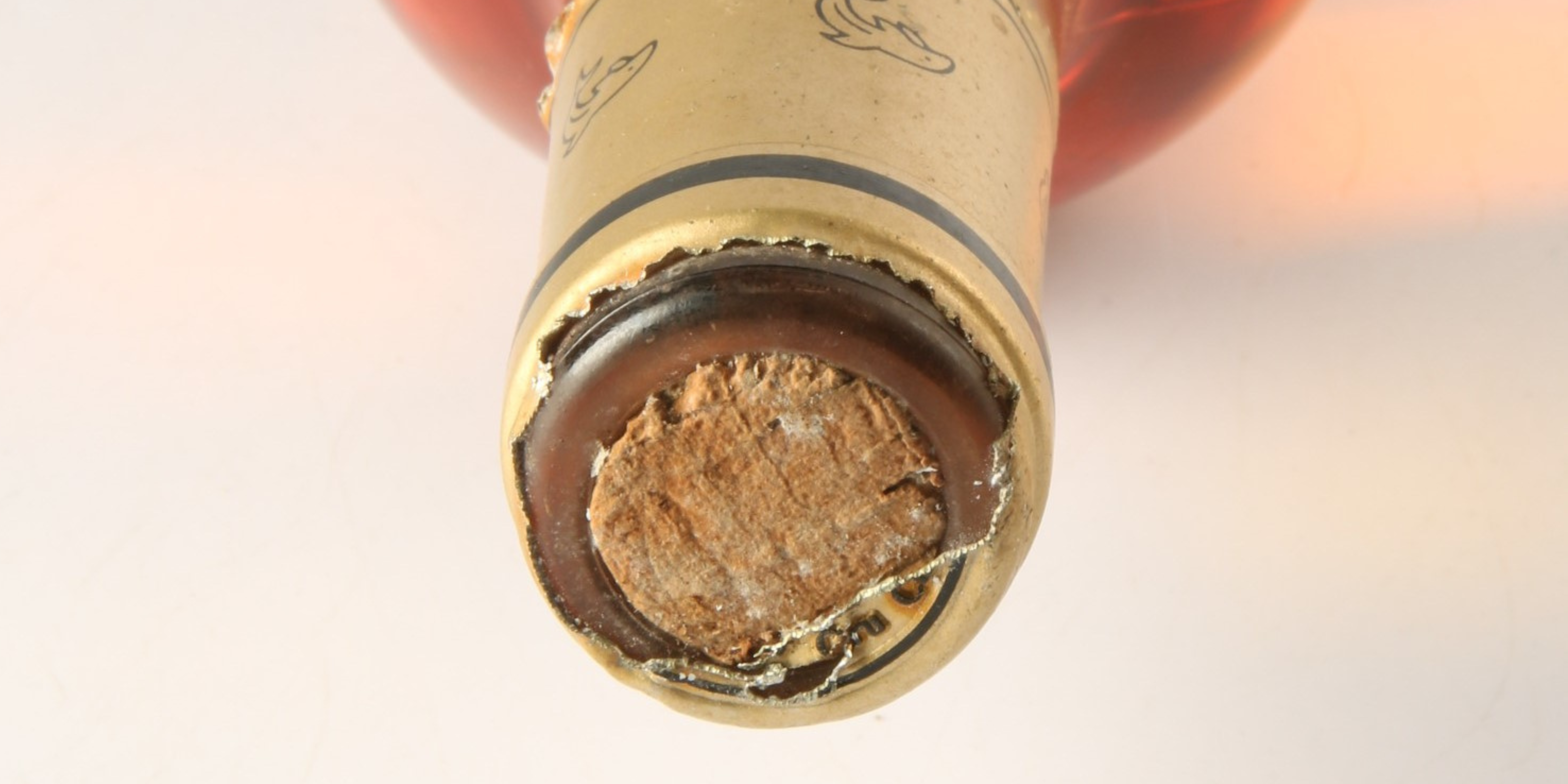
Capsules may unfortunately have been more or less damaged during handling. This generally has no impact on the quality of the wine. However, a capsule whose top (the part covering the cork) is pierced increases the risk of evaporation or even leakage.

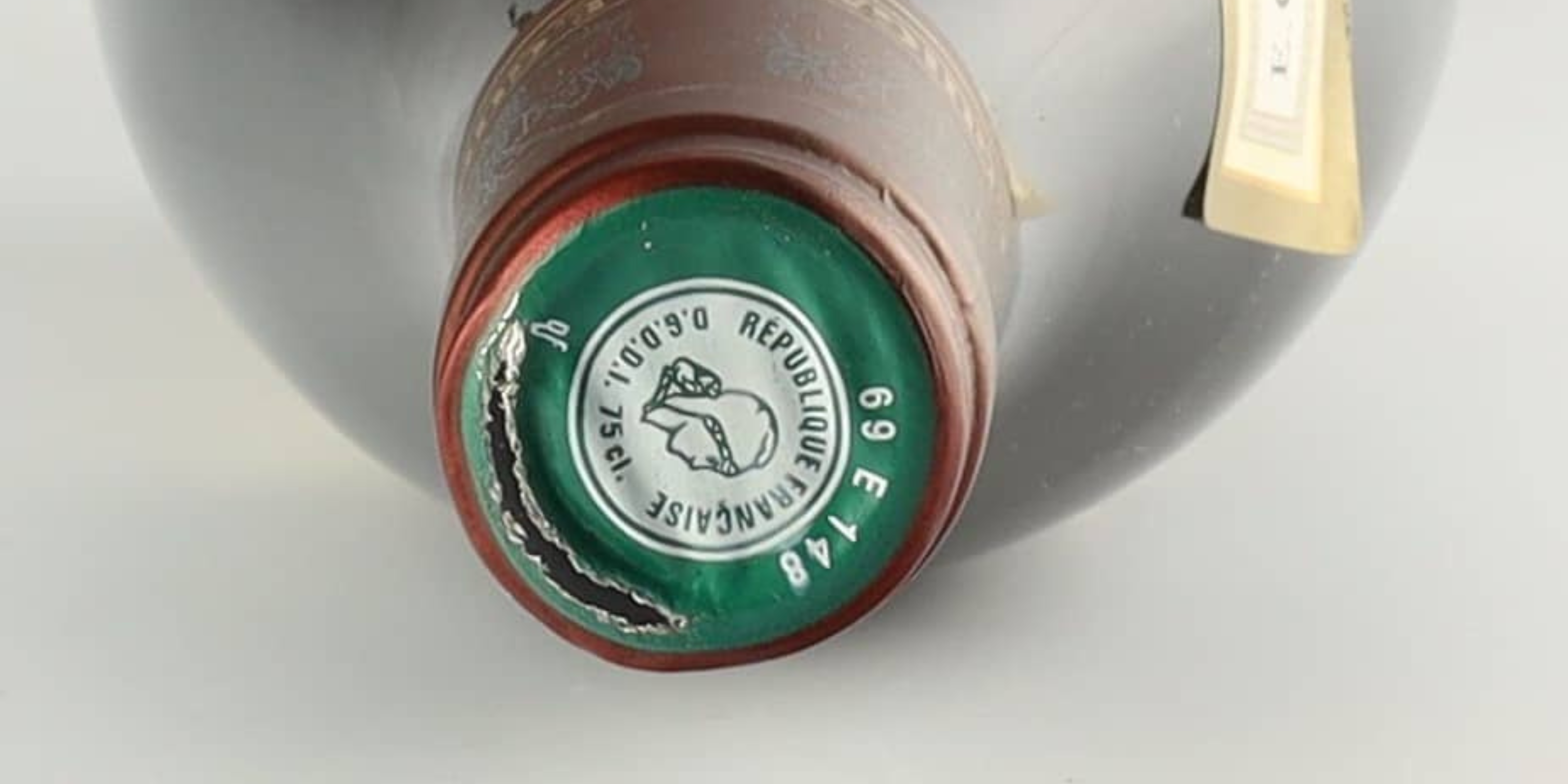
Capsule condition classification
- Slightly damaged
- Damaged
Details — Capsule condition
Capsule intact
An intact capsule is in perfect visual condition:
it is clean, smooth, with no signs of wear, dents or perforations.
This condition indicates that the bottle has been handled with care and stored in stable conditions.
This is the ideal condition, most common on recent or well-preserved wines.
An intact capsule reflects the quality of bottle preservation, but is not an indicator of the wine's taste quality.
Capsule slightly damaged
A slightly damaged capsule shows minor signs of wear:
the top of the capsule may have friction marks, small scratches or a superficial tear.
These slight imperfections do not affect the bottle's seal or the proper preservation of the wine in any way.
They simply reflect the natural aging of the bottle and the normal handling it may have undergone over time.
This level of condition is very common on old wines and remains perfectly acceptable.
Capsule damaged (pierced)
A damaged capsule is a capsule pierced at the top, intentionally or accidentally.
When it is pierced cleanly and locally, it is usually a professional inspection carried out by experts or merchants to check the wine level or the condition of the cork without opening the bottle.
This practice, common in the trade of old vintages, has no impact on the quality or preservation of the wine.
Each bottle concerned is rigorously inspected before being offered for sale, and this detail is always mentioned in its description.
Frequently asked questions about bottle condition
Does a slightly low level mean the wine is defective?
Not necessarily. For old vintages, a slight drop in level is normal. When we consider a level to be unusually low, we clearly indicate this in the wine description.
Does a damaged label affect the quality of the wine?
A marked or stained label is often a sign of storage in a humid cellar, an ideal condition for preserving wine over several decades.
titre
texte du bloc
Votre titre
Padding du bas toujours trop important
Toujours énorme
Titre des FAQ
premier point
c'est le texte du premier point
bloc texte cms
texte du bloc
titre vidéo
texte de la vidéo