/



















There are no products here at the moment.
You can use the search bar or menu to find others, or send us a message.
Back to homepage Contact us
Would you like to create the composition yourself? Contact us!
 Contact us


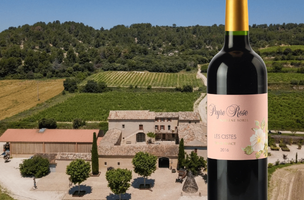
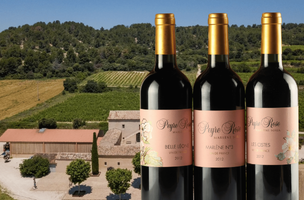
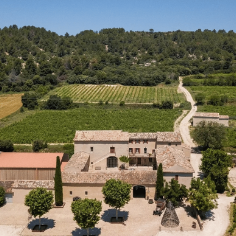
On the heights of Saint-Pargoire, between Béziers and Montpellier, Domaine Peyre Rose is the creation of a single woman, Marlène Soria, who cleared the garrigue by hand to plant her vineyard. Farmed organically on poor limestone and clay soils, the estate champions Syrah as its master grape variety, supported by Grenache and Mourvèdre. Its cuvées Les Cistes and Belle Léone, long classified under the Coteaux du Languedoc appellation, rank among the most distinctive reds in the region.
The estate stands out for aging its wines for eight to ten years before release. The 1998 vintage delivers the depth of great reds that have reached maturity, while the 2012 wine and the 2014 reveal a spicy, fleshy Syrah, built for extended cellar aging. Read moreYou can use the search bar or menu to find others, or send us a message.
Back to homepage Contact usSign up and be the first to hear about new arrivals.
Our selection of Great vintages from Peyre Rose...
Three things. First, a woman, Marlène Soria, who created the estate on her own, by hand, on the wild garrigue of Saint-Pargoire. Next, a grape variety, Syrah, which she placed at the heart of her wines, whereas the Languedoc mostly focuses on blending. Finally, time: each wine is aged for eight to ten years at the estate before being released, arriving mature and ready to drink.
It all depends on the style you are looking for. Les Cistes, dominated by Syrah and Grenache, is the most elegant and fresh, focusing on red fruit notes. Belle Léone, made from Syrah and Mourvèdre, is denser and darker, revealing black fruit, spices, and a smoky touch. The cuvée Marlène, more aromatic, offers a more immediate introduction to the estate's world.
Thanks to their extended aging, Peyre Rose red wines are already open and delicious upon release: they can be enjoyed right away. However, they retain great aging potential and can continue to improve for many years in the cellar. To fully appreciate them, serve at around 16–17°C (61–63°F), ideally after decanting, paired with grilled meats, game, or slow-cooked dishes.
The story of Domaine Peyre Rose is inseparable from that of its founder, Marlène Soria. Nothing predestined her for winemaking: she was working as a real estate agent when, in the early 1970s, she fell in love with an isolated property above Saint-Pargoire, a village in the Hérault region situated between Béziers and Montpellier. What was supposed to be a simple country home became the project of a lifetime. In the early 1980s, she cleared by hand wild garrigue that had never been cultivated before and planted her first vines, without mechanical machinery, electricity, or running water. Her first wines were crafted in the late 1980s under conditions of near-total destitution. Recognition came quickly: by the 1990s, French and international critics were raving about these reds from a forgotten corner of the Languedoc, and Marlène Soria became one of the first female winemakers in the region to be named personality of the year by the wine press. In just a few vintages, a confidential estate joined the elite circle of Languedoc’s finest wines.
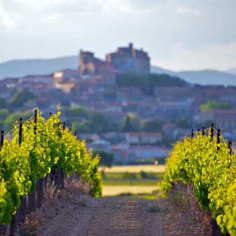
Domaine Peyre Rose owes much of its character to its isolation. Perched on the heights of Saint-Pargoire, far from villages and main roads, it is enclosed by a natural rampart of garrigue—the dry, aromatic hills where thyme, rosemary, and cistus (the wild rockrose that gave its name to one of the cuvées) thrive. The soils are poor and stony, combining limestone and clay; these demanding lands force the vines to drive their roots deep for nutrients, naturally keeping yields low. From the very beginning, everything has been farmed organically, without fertilizers or synthetic chemical treatments. This soil poverty, often seen elsewhere as a drawback, becomes an invaluable asset here: low yields, highly concentrated grapes, and a distinct mineral imprint that shines in the glass. Production remains deliberately limited, explaining the rarity of the estate’s wines.
Marlène Soria built her estate around Syrah, the great red grape variety of the northern Rhône Valley, which she has long admired. At Peyre Rose, Syrah dominates the plantings, complemented by Grenache, Mourvèdre, and a touch of Carignan for the reds, while a small area is planted with white varieties (Rolle, Roussanne, Viognier). But the estate's true hallmark lies in its patience. While most winemakers release their wines one to two years after harvest, Peyre Rose only releases its reds after eight to ten years—and sometimes even longer for the white. The wines age extensively in concrete vats, and, for more recent vintages, partly in large wooden foudres, followed by a final period of bottle aging at the estate. This prolonged aging is no whim: it gives the tannins time to soften and allows the aromas to evolve well before release. As a result, each bottle arrives already expressive, showing notes of ripe dark fruit, sweet spices, and garrigue, developing over time into truffle, leather, and smoke. It can be enjoyed immediately, which remains rare for a wine of this stature.
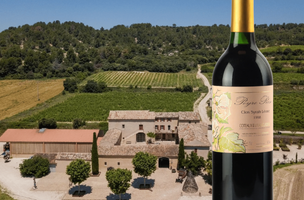
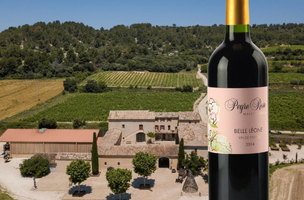
The estate is best understood through its cuvées, each originating from a specific plot and precise blend. Les Cistes, from the lieu-dit of the same name on cool limestone and clay soils, combines a large majority of Syrah with a touch of Grenache: it is the estate's most elegant wine, showcasing red fruit and freshness. Belle Léone, born from a plot of Syrah and Mourvèdre planted on red clay, is darker and denser, featuring dark fruit, roasted spices, and a touch of smoke. The cuvée Marlène, dominated by Syrah and Grenache, offers a more aromatic and approachable profile; to these is added a rare white, Oro, aged even longer. One detail worth clarifying for wine lovers: long sold under the Coteaux du Languedoc appellation, the two flagship red cuvées have, since the 2011 vintage, been labeled as Vin de France—a simple administrative label change that in no way alters the origin or winemaking practices. Older bottlings, such as Clos Syrah Léone, still bear the former name and appellation.
To understand Peyre Rose, one must place it within the generation of estates that transformed the image of the Languedoc, turning a region known for simple wines into a land of grand crus. Mas de Daumas Gassac was the first to show, starting in the 1970s, that wines worthy of aging and comparable to the finest could be crafted here. Mas Jullien established a refined, precise expression of the hillside terroir. Grange des Pères built its reputation on blends of exceptional depth, now among the most sought-after in the South of France. Peyre Rose occupies a truly unique place in this landscape: while others sought balance through blending, Marlène Soria staked everything on pure Syrah and extended aging—a path with virtually no equivalent in the region. Exploring these estates side by side is undoubtedly the best way to grasp the diversity of the great wines of Languedoc-Roussillon and the singular contribution of Peyre Rose to their renown.