 /
/ 
















There are no products here at the moment.
You can use the search bar or menu to find others, or send us a message.
Back to homepage Contact us
Would you like to create the composition yourself? Contact us!
 Contact us

The 1956 vintage entered the history of the French vineyard as "the Black Year": the coldest winter since 1709, icebergs on the Garonne, temperatures down to -20 °C in the Médoc and 80% mortality among the Merlot vines of Pomerol and Saint-Émilion. Harvest began in early October at only 25% of the normal yield. Only one region emerged with its honour intact: the Rhône Valley, where Domaine Guigal 1956 remains the most sought-after name. In Bordeaux, Château Ausone 1956 embodies the survival of the great terroirs. An exceptionally rare vintage, ideal as a 70th anniversary wine steeped in history.
Read moreYou can use the search bar or menu to find others, or send us a message.
Back to homepage Contact usSign up and be the first to hear about new arrivals.
The 1956 vintage stands alone in the history of the French vineyard: it was the coldest winter since 1709. In February, temperatures plummeted to -14 °C in Bordeaux itself, down to -20 °C in the Médoc and -30 °C in Burgundy. Eyewitness accounts speak of icebergs floating on the Garonne, and people skiing on the Place des Quinconces. The vine, already weakened by the harsh winter of 1955, was hit full force: in Pomerol and Saint-Émilion, up to 80% of the Merlot vines died, necessitating a massive replanting that would mark the beginning of the modernisation of the Bordeaux vineyard. Harvest began on 7 October at only 25% of the normal yield, and of generally disappointing quality. One major exception: the Rhône Valley, where the granitic terroirs of the north were spared and produced the only truly quality wines of the year.
In Bordeaux, the Black Year struck hard. The February frost destroyed up to 80% of the Merlot vines in Pomerol and Saint-Émilion, forcing a massive replanting that continues to shape the modern Bordeaux vineyard today. The left bank was less affected, but the cold, rainy summer that followed made things no better: late harvest in early October, tiny yields, red wines generally light and supple, with bouquets that have since evolved toward undergrowth, leather and truffle. An uneven profile, but one that comes into its own in the Sauternes, carried by acidity and sugar — the two best natural preservatives in wine.
The greatest success of the vintage in Bordeaux remains Château d'Yquem 1956, rated 94/100 by Jean-Marc Quarin — a sweet wine with a copper-coloured robe, a nose of pumpkin jam and orange zest, defying the decades. In reds, Château Ausone and Château Latour feature, alongside Margaux, Mouton and Haut-Brion, among the very rare names whose 1956 deserves the attention of collectors.
In Burgundy, the February frost reached -30 °C, killing the vines down to the root. Bud break was delayed, growth was weak, and the harvest was minuscule. The wines that survived tell this story of adversity: pure, acidic whites, and reds that are upright, taut, almost ascetic. This is a vintage that recalls the dignity of which the Burgundy terroir remains capable even in its hardest years, yet it never reaches the generous palette of its great neighbouring vintages.
The Domaine de la Romanée-Conti 1956, and La Tâche in particular, remains the most sought-after icon of the vintage in Burgundy — captivating for its austere elegance, its nose of undergrowth, spices and dried rose. The Armand Rousseau estate, a pioneer of domaine bottling in Gevrey, is one of the very few other names whose surviving 1956 merits attention.
In the Rhône Valley, the granitic slopes of the north — Côte-Rôtie, Saint-Joseph, Hermitage — escaped the frosts that ravaged the French vineyard. Syrah, grown on these poor, well-drained soils, produced wines of remarkable uprightness and tension, with decent ripeness and preserved acidity. The south was more uneven, with Grenache sometimes lacking concentration, but overall the Rhône stands well above every other French region for this vintage.
The Côte-Rôtie wines from Domaine Guigal 1956 are among the rare wines of that year still sought after for drinking. The Hermitage from Jean-Louis Chave 1956, from the granitic slopes of Tain, equally embodies this northern success, alongside the Châteauneuf-du-Pape from Rayas and Beaucastel. These bottles are extremely difficult to find today — but they are, along with Yquem, the only ones from this vintage that a wine lover can realistically hope to drink in good condition.
The 1956 wine is not a vintage of power or longevity, but one of emotion and history. Every bottle tells the story of winegrowers' resilience in the face of a devastating frost. Whether it is a great 1956 Bordeaux, a 1956 Burgundy red, or a mythical 1956 sweet wine, these bottles have become prized collector's pieces for their rarity and their heritage value.
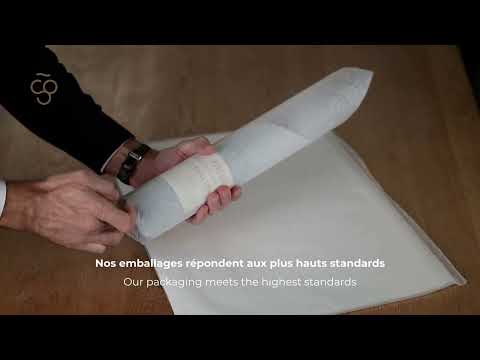
Choosing a 1956 wine means offering something doubly rare: the quality of a surviving bottle and the history it carries — that of the frost that reshaped the entire French vineyard. For a 70th anniversary in 2026, the emotion is complete. These bottles appear only as we acquire cellars: create an alert on this page to be notified of each new arrival, and consult the SoDivin Vintage Guide to place 1956 among the years of its century. Every bottle offered is expertly assessed and verified — level, label, provenance — then shipped the same day before 2 pm in secure packaging, with high-definition photographs.