 /






















There are no products here at the moment.
You can use the search bar or menu to find others, or send us a message.
Back to homepage Contact us
Would you like to create the composition yourself? Contact us!
 Contact us
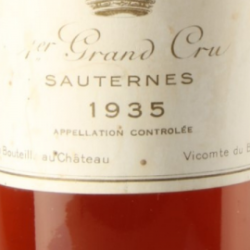
The 1935 vintage stands in the shadow of the great 1934, sharing its profile in a lighter style. A cold spring followed by rain at harvest gave Bordeaux refined but lightly structured reds, to be enjoyed for the pleasure of drinking an old wine rather than for further aging. Burgundy was the year's real success: its whites reached a remarkable standard, ripe and precise, among the decade's finest, closely followed by impressive reds from the best Côte de Nuits terroirs. Domaine des Comtes Lafon 1935 illustrates the quality of the whites, while Château Pichon Comtesse de Lalande 1935 shows the best the Médoc produced that year. To see how 1935 compares with other years of its era, consult our Vintage Guide.
You can use the search bar or menu to find others, or send us a message.
Back to homepage Contact usSign up and be the first to hear about new arrivals.
1935 was a respectable year, long overshadowed by the great 1934 vintage before it and by the war that broke out around the time of bottling. Its successes were concentrated in Burgundy, where the whites are considered excellent — ripe, precise and exceptionally refined — while the reds from the best sites also held their own. In Bordeaux, the reds are lighter and lack structure: pleasant, but without much aging potential. For an example of the year’s finest whites, Domaine Leflaive remains a benchmark.
Someone born in 1935 turns 91 in 2026: it is not a milestone birthday, but their birth year is an ideal way to mark a personal occasion with a bottle from the same year. At this age, the most reliable choices are those that stand the test of time: a great white Burgundy with an impeccable fill level, a sweet Sauternes, or, above all, an old Armagnac, a spirit made to endure for decades. These brandies can still be enjoyed well beyond ninety years and make the safest gift. Always check the fill level and condition of the bottle before buying.
It all depends on the type of wine and how it has been stored. Well-cellared great white Burgundies can still surprise with their liveliness and aromas of honey and dried fruit, while sweet wines retain appealing richness. Reds, more fragile from the outset, are mainly for collectors: even among the classified growths of Bordeaux, only bottles with an impeccable history are worth opening. Before buying, examine the fill level, color and condition of the label: at more than ninety years old, every bottle is unique.
The 1935 vintage was a respectable year, shaped by a cold spring and a rainy harvest. Long overshadowed by the great 1934, it has a similar profile in a lighter style. For today's enthusiasts, its appeal lies not in power but in finesse and rarity: Burgundy, especially its whites, produced the year's best wines, while Bordeaux made delicate reds for the curious. 1935 was also a founding year for French appellations: the legislation establishing the AOC system and what is now the INAO dates from that year. Explore this page region by region to distinguish wines still worth opening from those best kept as collector's items.
Burgundy was the clear winner in 1935. The abundant harvest produced wines similar to those of 1934 but a little lighter, with the finest cuvées coming from grapes picked late. The whites reached a remarkable standard: ripe, balanced, and precise, they rank among the decade's successes. The reds followed, good to very good from the best terroirs, built on finesse and freshness rather than weight. This is the region to prioritize for this vintage.
Among the whites, Bouchard Père & Fils, based in the Côte de Beaune, is among the names whose 1935 wines can still offer a memorable experience when perfectly preserved. For reds, the great names of the Côte de Nuits lead the way: Domaine Georges Roumier in Chambolle-Musigny and Domaine Armand Rousseau in Gevrey-Chambertin, whose estate-bottled wines from that era are considered milestones, produced the year's most noteworthy bottles. Today, these wines are appreciated for their evolving aromas — forest floor, dried fruit, sweet spices — as much as for their lingering finish.
Aging potential: great whites with impeccable fill levels remain the safest choice from 1935; Côte de Nuits reds, selected bottle by bottle for their provenance, can still offer memorable drinking.
In Bordeaux, 1935 was a modest year. A cold spring reduced the crop, and rain at harvest produced refined but lightly structured reds, better suited to the pleasure of drinking an old wine than to further aging. The year was better than the disastrous vintages of the early decade, but came nowhere near the brilliance of 1934. The sweet wines of Sauternes, harvested later, fared unevenly: the best bottles, sustained by sugar and acidity, have stood the test of time most successfully.
On the Left Bank, Château Latour and the Médoc's first growths remain names whose well-preserved 1935 bottles merit attention, as does that year's Pichon Comtesse de Lalande. On the Right Bank, a more abundant harvest yielded a few reds that lived up to expectations, while in Sauternes the great sweet wines retain remarkable richness in intact bottles. The year's rule comes down to one word: provenance makes all the difference, and every surviving bottle must be assessed individually.
Aging potential: Sauternes sweet wines and a few rare first growths remain lively if fill levels are high; reds are best left to knowledgeable collectors, after checking fill levels and recorking history.
The Rhône Valley did not distinguish itself in 1935. The vintage was subdued, lacking the consistency of great sunny years, and wines with aging potential were the exception. The cooler north produced respectable but seldom dense Syrahs, while the south lacked the brilliance of its best vintages. One name stands out clearly, however: the Hermitage from Domaine Jean-Louis Chave, considered a remarkable success for the year and the Rhône bottle to seek out from this vintage. Otherwise, 1935 Rhône wines are curiosities to open without delay.
Aging potential: apart from a few great Hermitage wines, 1935 Rhône wines should be drunk now, provided the bottles are in impeccable condition.
Champagne produced a balanced 1935 harvest without excessive ripeness, favoring elegance over power. Few houses, however, made a vintage Champagne: most grapes went into non-vintage blends, and the Louis Roederer house was among the very few to declare a 1935 vintage. The surviving vintage cuvées show a highly evolved profile — brioche, dried fruit, honey — sought by lovers of old Champagne when the bubbles have retained their finesse. Today, they are primarily collector's items.
Aging potential: collector's items with highly evolved profiles, best left to knowledgeable enthusiasts and bottles with impeccable histories.
This is where 1935 comes into its own for today's enthusiasts. While the year's still wines are fading, the spirits of Southwest France were made to defy time: the alcohol in old Armagnac acts as a natural preservative, allowing a vintage to endure well beyond 90 years. Aged for many years in barrels, these spirits gain depth and develop the prized rancio notes — dried fruit, prunes, spices — that define their character.
The old Armagnac from Domaine Sempé, a producer in the Gers known for extended aging, illustrates this longevity: a 1935 Armagnac of this kind can be enjoyed without decanting, with just a little air in the glass, and withstands the passage of decades far better than the year's fragile reds. Other age-worthy styles round out the picture for 1935: Chenin Blancs and sweet wines from the Loire, sustained by their acidity, and the year's great Ports, reputed to be among the decade's finest, are also among the most reliable choices for drinking.
Aging potential: 1935 Armagnac remains excellent for drinking and is the safest birth-year gift; the year's Loire Chenin Blancs and Ports can be enjoyed from well-preserved bottles.
Choosing a 1935 wine means accepting the rule of old vintages: quality depends less on the year's reputation than on the terroir and storage conditions. For this vintage, savvy enthusiasts should look first to great Burgundy whites, then to Côte de Nuits reds and spirits made for aging, leaving Bordeaux reds to collectors. These bottles become available only as we acquire cellars: set an alert on this page to hear about each new arrival, and use the SoDivin Vintage Guide to see how 1935 compares with other years of its century. Every bottle offered is professionally assessed and checked — fill level, label, provenance — then shipped the same day for orders placed before 2 p.m. in protective packaging, with high-definition photos provided.